 how-to
Managing Dust During Home Renovation: 7 Practical Steps
Table of Contents
- What You'll Need Before You Start
- Step 1: How to Seal Off a Room for Renovation
- Step 2: Protecting HVAC During Construction
- Step 3: Best Air Scrubbers for Home Renovation
- Step 4: Managing Dust During Home Renovation with Daily Habits
- Step 5: Common Mistakes to Avoid When Managing Dust
- Frequently Asked Questions
Last Updated: September 23, 2026
What You'll Need Before You Start
Managing dust during home renovation is the difference between a project you remember fondly and one you never want to repeat. A few hours of prep can save weeks of cleanup. Dust travels further than most people expect, settling on surfaces in rooms you never opened.
Before you swing a hammer, gather these supplies:
- Heavy plastic sheeting (4-6 mil) and painter's tape
- Zip-wall doorway barriers
- HEPA-rated vacuum with a HEPA filter
- Box fans and air scrubber (rental is fine)
- N95 or P100 respirators
- Drop cloths and damp rags
- Sealable garbage bags
The Canadian Centre for Occupational Health and Safety guidance on respiratory protection is worth a look before you start. It explains why particle size matters more than you'd think.
Step 1: How to Seal Off a Room for Renovation
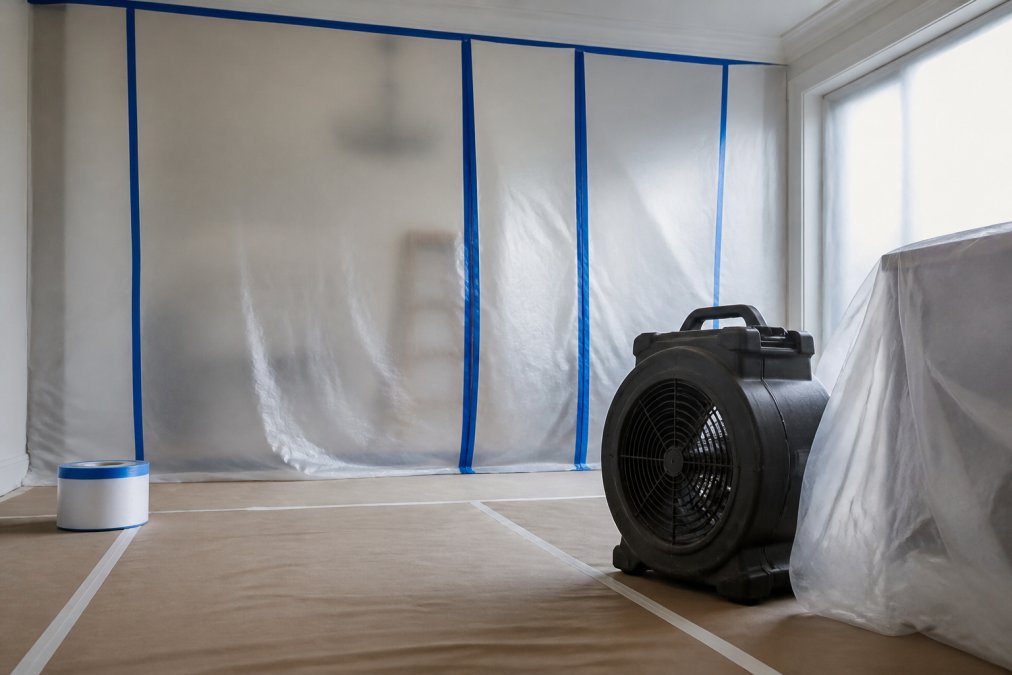
Sealing off a room means creating a physical barrier that keeps dust inside the work zone. The goal is a controlled containment area, not just a closed door.
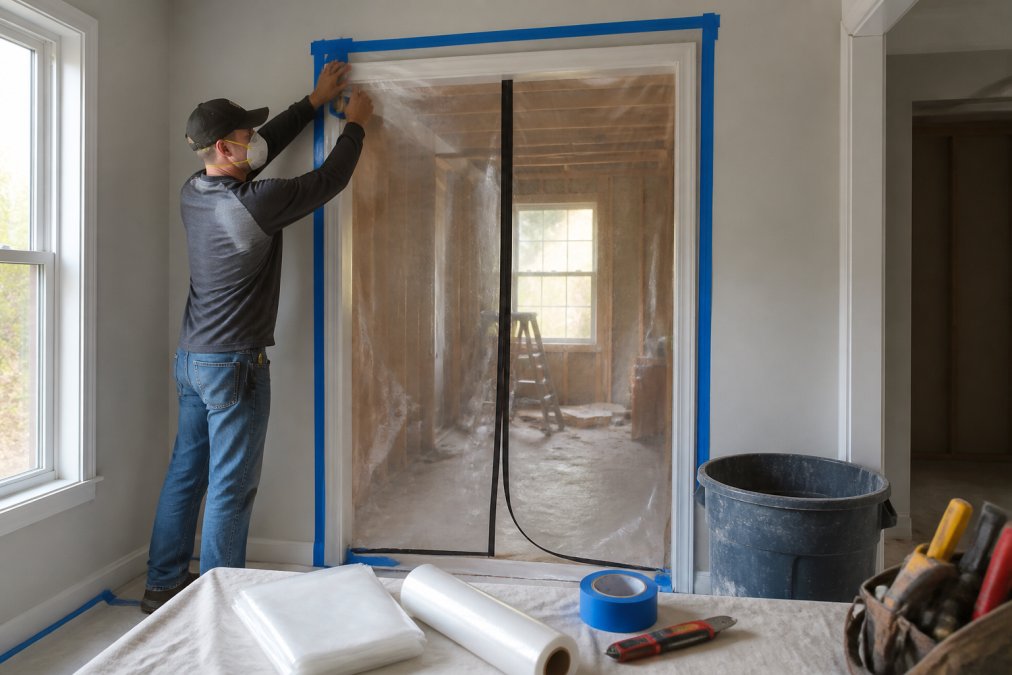
Start with the room's entry points. Tape plastic over doorways, then add a zip-wall so you can still get in and out. Close and tape any heating or cooling vents inside the room. Cover furniture you can't move with plastic sheeting.
Sealing Doorways and Vents
Doorways are the biggest leak point. A single open door lets dust drift into hallways and bedrooms within minutes.
- Tape plastic across the full door frame, floor to ceiling
- Install a zip-wall door for access
- Seal return air vents with plastic and tape
- Block gaps under doors with rolled towels or foam
- Tape off any floor registers in the room
Step 2: Protecting HVAC During Construction
Protecting HVAC during construction keeps dust out of your ductwork and furnace. Once dust gets into a system, it recirculates through the whole house every time the heat or air runs.
Turn off your thermostat before you start demo work. Then seal every supply and return vent in and near the work area with plastic and tape. Change your furnace filter when the project ends, and consider a mid-project swap if the job runs long.
When to Shut Off Your System
Shut the system off the moment demolition begins. Running heat or air pulls dust into the return vents and spreads it through every room.
- Turn off the thermostat before the first hammer swing
- Keep it off during heavy dust work like sanding or drywall
- Seal vents with plastic, not just closed louvers
- Replace the filter after the project finishes
The Canada Mortgage and Housing Corporation guide to home renovation notes that a clean filter change is one of the simplest ways to protect indoor air quality after a renovation.
Step 3: Best Air Scrubbers for Home Renovation
The best air scrubbers for home renovation are HEPA-filtered units that pull air through a fine filter and cycle it several times per hour. They capture the tiny particles a vacuum misses.
Look for a unit with a HEPA filter rated for fine particles. Place it inside the work zone, near the dust source. Run it continuously during work and for a few hours after you finish each day.
HEPA vs. Standard Filters
HEPA filters trap far smaller particles than standard filters. Standard filters catch larger debris but let fine dust pass straight through.
- HEPA: captures fine dust, best for sanding and drywall
- Standard: catches larger particles only, limited use
- Change or clean filters as they load up
- Match the unit's airflow to your room size
Step 4: Managing Dust During Home Renovation with Daily Habits
Managing dust during home renovation comes down to small habits repeated every day. Big cleanup sessions don't work as well as steady, consistent effort.
Wipe surfaces with a damp cloth instead of dry dusting. Dry dusting just moves dust back into the air. Vacuum with a HEPA unit at the end of each workday, and take off dusty clothes before you leave the work zone.
- Damp-wipe surfaces daily
- HEPA-vacuum floors and ledges each evening
- Bag debris immediately, don't let it pile up
- Keep the work zone door closed at all times
- Change clothes before walking through the house
Step 5: Common Mistakes to Avoid When Managing Dust
The biggest mistake is treating dust control as an afterthought. Most people seal nothing, run their furnace, and wonder why the whole house is coated by week two.
Other common errors:
- Using a shop vac instead of a HEPA vacuum
- Leaving the HVAC running during demo
- Taping vents from the inside of the work zone
- Removing barriers before the final clean
- Skipping the filter change at the end
Each of these spreads dust into rooms you thought were safe. Fix them before you start, not after.
Frequently Asked Questions
How do I keep dust from spreading during a home renovation?
The most effective method is to seal off the work area before demolition begins. Use plastic sheeting and zipper doors on all doorways, cover HVAC vents, and place a HEPA air scrubber inside the contained space. This creates a negative air pressure zone that pulls dust inward instead of letting it drift into living areas. Daily cleanup with a HEPA vacuum and damp cloths also stops dust from building up on surfaces.
Do air purifiers help with renovation dust?
Yes, but only if they use a true HEPA filter. Standard air purifiers with washable or electrostatic filters will not capture fine drywall dust and may even spread it. For renovation work, choose an air scrubber rated for the room size with a HEPA filter and a pre-filter to catch larger particles. Run it continuously during work hours and for at least 24 hours after sanding or drywall work ends.
How do I protect my HVAC system from construction dust?
Turn off your HVAC system before starting any dusty work. Seal all supply and return vents in the renovation zone with plastic and tape. Change your furnace filter to a high-MERV rating before the project and replace it again immediately after. If your system has a fresh-air intake, close it. For long projects, have an HVAC technician inspect and clean the system once work is complete.
Should I cover furniture during a home renovation?
Yes. Even with sealed rooms, fine dust travels. Move furniture out of the work zone if possible. If not, wrap it in plastic sheeting and seal the edges with tape. Remove curtains, rugs, and fabric items, or cover them with drop cloths. Pay attention to electronics, which can overheat if wrapped too tightly, and use breathable covers or unplug and move them to another room.
Dust control is one of those jobs that rewards planning over muscle. The homeowners who stay stress-free during a renovation are the ones who seal, filter, and clean on a schedule. That's the approach Restmark Renovations brings to every project, with a clean and organized workspace, clear communication, and a managed timeline from the first day to the final walkthrough. We handle the dust so you don't have to. Get a free estimate and start your renovation on the right foot.