 listicle
10 Best Basement Flooring Options for Damp Areas
Table of Contents
- Why Damp Basements Need Different Flooring
- How to Diagnose Moisture Before You Choose a Floor
- Waterproof Basement Flooring vs. Water-Resistant Options
- The 10 Best Flooring Options for Damp Basements
- 1. Luxury Vinyl Plank (LVP) and SPC Flooring
- 2. Porcelain and Ceramic Tile
- 3. Epoxy Coating and Epoxy Paint
- 4. Polished and Sealed Concrete
- 5. Waterproof Laminate
- 6. Engineered Wood
- 7. Rubber Flooring
- 8. Interlocking Waterproof Tiles (SupraTile, StayLock)
- 9. Raised Floor Tile Systems (Max Tile)
- 10. Comfort Matta Waterproof
- Vinyl Flooring Over Concrete Basement: What to Know
- Basement Floor Moisture Barrier and Subfloor Prep
- Basement Flooring Cost: Installed Price Comparison
- Mold, Air Quality, and Health Considerations
- Frequently Asked Questions
Last Updated: October 9, 2026
Why Damp Basements Need Different Flooring
A damp basement will destroy the wrong floor.
Concrete slabs below grade pull moisture from the soil around them. The Canada Mortgage and Housing Corporation guidance on basement moisture is blunt about this: managing water at the source comes before any finish goes down.
The good news is that a genuinely waterproof floor, installed over a properly assessed slab, handles damp conditions without drama. The bad news is that "waterproof" gets used loosely in flooring marketing.
Below, we break down how to test your slab, which materials actually survive moisture, and what each option costs installed.
How to Diagnose Moisture Before You Choose a Floor
Test your slab before you buy anything. Skipping this step is the single most common and most expensive mistake in basement flooring, because it decides which of the options below are even viable in your home.
Two tests cover most situations:
- Plastic sheet test (DIY): Tape a 60 cm square of plastic sheeting to the slab for 24 to 48 hours. Condensation underneath means vapor is moving up through the concrete.
- Calcium chloride or in-situ relative humidity test (professional): A flooring contractor or moisture specialist measures the actual vapor emission rate. This is the number that matters for warranty compliance.
Simple tests for slab moisture and humidity
Alongside the slab test, check ambient humidity with a hygrometer over several days. A damp-feeling basement that reads consistently high humidity usually has both a vapor problem and an air-movement problem, and flooring alone will not fix the second one. A dehumidifier and improved ventilation often need to come first.
Waterproof Basement Flooring vs. Water-Resistant Options
Waterproof means the material itself will not absorb water or break down when submerged. Water-resistant means it tolerates surface moisture and spills but has limits.
That distinction matters in a basement because the risk is not a spilled drink.
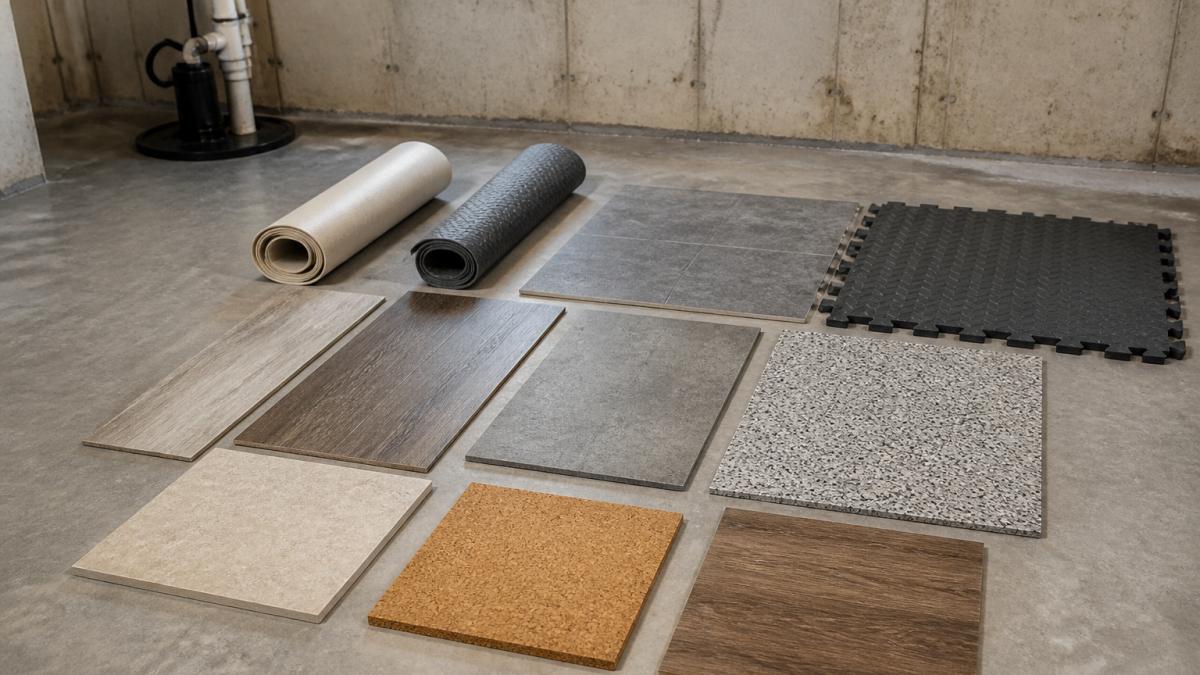
For damp areas, prioritize genuinely waterproof materials: luxury vinyl plank, SPC (rigid-core vinyl), porcelain and ceramic tile, epoxy coatings, and rubber flooring.
The 10 Best Flooring Options for Damp Basements
Here are the ten options we recommend most often, ranked by how well they handle moisture, comfort, and long-term value in a below-grade space.
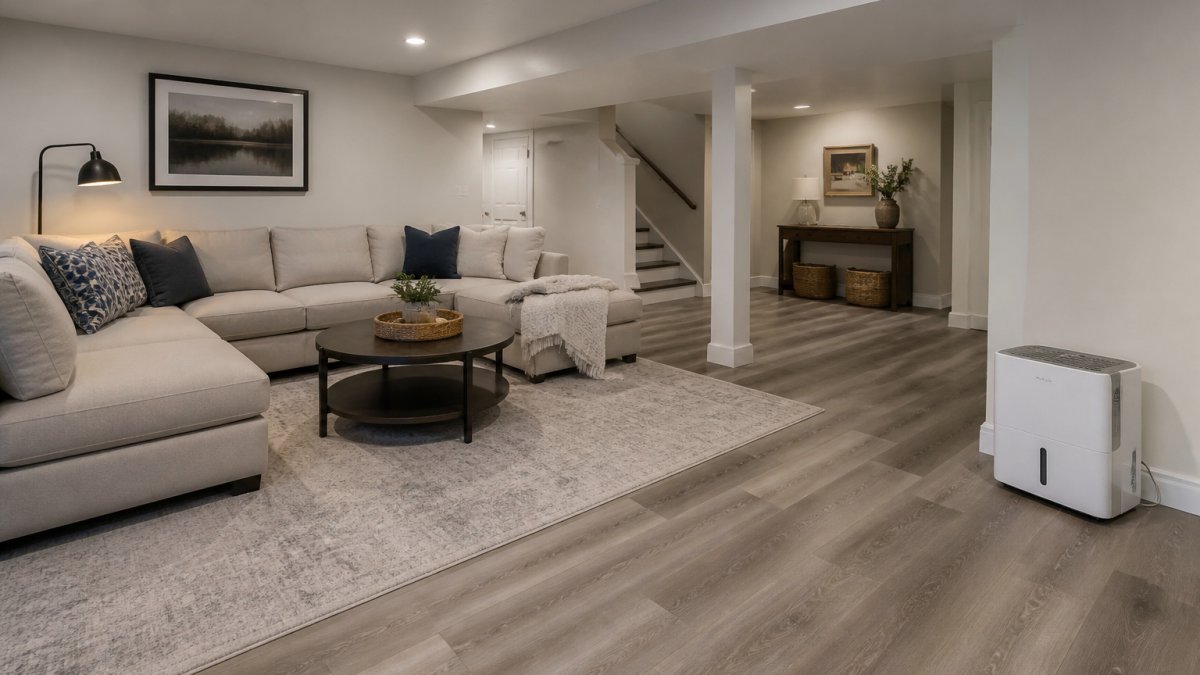
1. Luxury Vinyl Plank (LVP) and SPC Flooring
Luxury vinyl plank is the default choice for damp basements, and for good reason. Modern LVP and its stiffer cousin, SPC (rigid-core vinyl), are waterproof through the full thickness of the plank. Many products can be submerged, dried, and reinstalled.
The trade-off is that not all vinyl is equal. Thin, hollow-sounding planks telegraph every slab imperfection. We specify rigid-core SPC with an attached underlayment for basements, because it hides minor slab variation and resists denting under furniture.
2. Porcelain and Ceramic Tile
Porcelain and ceramic tile are highly water-resistant, long-lasting, and effectively indifferent to moisture once installed. They are the right call for basement bathrooms, wet bars, and laundry areas, where standing water is a real possibility.
The catch is comfort. Tile is cold underfoot on a concrete slab, and grout lines need sealing and occasional maintenance. Installed cost runs roughly $10 to $50 per square foot depending on tile and layout, according to Basement Remodeling's flooring comparison.
3. Epoxy Coating and Epoxy Paint
Epoxy is a coating, not a covering, so there are no seams for water to exploit. It bonds directly to a prepared concrete slab and creates a continuous, waterproof surface that handles standing water well.
The limitation is preparation. Epoxy needs a clean, dry, properly profiled slab, and it will not hide cracks or unevenness. It also feels hard and cold, so most homeowners use it in service areas rather than living space.
4. Polished and Sealed Concrete
Polished and sealed concrete is the slab itself, finished and protected. It handles moisture well, requires little maintenance, and delivers a clean, modern look that suits contemporary basements. A comparison of basement flooring options rated its moisture performance as good, with a price range of $3 to $6 per square foot, per ShowFloor's basement flooring guide.
Where it falls short: concrete is unforgiving underfoot and offers no warmth or cushioning. Sealer needs periodic reapplication to stay effective.
5. Waterproof Laminate
Waterproof laminate has improved dramatically. The core is now typically water-resistant or waterproof, and the surface layer resists spills. It offers a wood look at a lower price than engineered wood.
Treat the "waterproof" label with care. Most waterproof laminate is rated for surface moisture and short-term spills, not for standing water or flooding. In a basement that has ever taken on water, we would choose LVP over laminate every time.
6. Engineered Wood
Engineered wood brings genuine warmth and character to a basement, and its plywood core handles humidity swings better than solid hardwood. In a dry, well-managed basement, it can work beautifully.
In a genuinely damp area, it is a risk. Engineered wood is water-resistant at best, and prolonged moisture will damage it. Use it only where moisture testing confirms the slab is dry and humidity stays controlled year-round.
7. Rubber Flooring
Rubber flooring is waterproof, comfortable, and quiet, which makes it a strong fit for home gyms, playrooms, and laundry areas. It handles moisture without swelling and provides cushioning that hard surfaces cannot match.
The trade-off is appearance. Rubber reads as utilitarian, and it is not the finish most homeowners want across an entire finished basement. It works best as a targeted choice for specific rooms.
8. Interlocking Waterproof Tiles (SupraTile, StayLock)
Interlocking waterproof tiles, such as SupraTile and StayLock, snap together over a slab with no adhesive and no grout. They are designed for waterproof basement use, and the loose-lay format means individual tiles can be lifted, dried, and reinstalled after a leak.
The catch is that these are specialty products with a specific look, and pricing is not always easy to find without a quote. They shine in basements where easy repair after water intrusion matters more than a seamless finish.
9. Raised Floor Tile Systems (Max Tile)
Raised floor tile systems like Max Tile sit on small pedestals above the slab, creating an air gap that lets moisture evaporate instead of trapping it.
The trade-off is height. A raised system adds a few centimetres to the floor, which affects door clearances and transitions. It is a smart solution for chronically damp slabs where you want a finished floor without sealing the moisture in.
10. Comfort Matta Waterproof
Comfort Matta Waterproof is a mat-style flooring option designed for damp basements. It is waterproof by design and included in guides focused specifically on moisture-prone basement floors. It suits homeowners who want a soft, warm surface without the coldness of tile or concrete.
The limitation is specification. Detailed installation and performance data are not widely published, so confirm the manufacturer's moisture requirements before committing.
| Option | Water Performance | Best For | Installed Cost Signal |
|---|---|---|---|
| LVP / SPC | Waterproof | Most finished basements | Mid-range |
| Porcelain / ceramic tile | Water-resistant | Bathrooms, wet bars | $10-$50/sq ft |
| Epoxy coating | Waterproof | Utility, gym, laundry | Varies by prep |
| Polished concrete | Good moisture performance | Modern, low-maintenance | $3-$6/sq ft |
| Waterproof laminate | Spill-resistant | Dry, managed basements | Lower than wood |
| Engineered wood | Water-resistant | Dry basements only | Mid to high |
| Rubber | Waterproof | Gym, playroom | Mid-range |
| Interlocking tiles | Waterproof | Easy-repair spaces | Quote required |
| Raised tile systems | Waterproof (vented) | Chronically damp slabs | Quote required |
| Comfort Matta | Waterproof | Warm, soft finish | Quote required |
Vinyl Flooring Over Concrete Basement: What to Know
Vinyl flooring over a concrete basement slab works well when the slab is sealed and dry. The concrete itself must be tested first, and any active leaks or cracks repaired before installation.
Two practical points decide success. First, seal the slab with a vapor barrier or moisture-mitigating sealer so vapor cannot push up into the planks. Second, choose rigid-core SPC over thin vinyl for a basement, because it tolerates minor slab unevenness and stays flat underfoot.
Basement Floor Moisture Barrier and Subfloor Prep
A basement floor moisture barrier is not optional in a damp space. It is the layer that stops vapor from reaching your flooring, and it is cheaper than replacing a buckled floor.
Preparation follows a clear sequence:
- Test the slab for moisture and repair cracks.
- Seal the concrete or lay a dedicated vapor barrier membrane.
- Level any low spots with a self-leveling compound.
- Choose an underlayment compatible with your flooring type.
- Acclimate materials, then install.
Basement Flooring Cost: Installed Price Comparison
Basement flooring cost depends on material, slab condition, and room size, so treat any single number as a starting point rather than a quote. The material you choose sets the floor, but preparation and labor often decide the final bill.
LVP, epoxy, rubber, and specialty interlocking systems vary widely by product and preparation needs, so pricing depends on quantity, product selection, and existing slab condition. For current figures on a basement project, check our website for a tailored estimate.
Mold, Air Quality, and Health Considerations
Mold needs moisture, and a damp basement with an organic floor covering supplies it. That is why material choice is also a health decision, not just an aesthetic one.
Waterproof and inorganic surfaces, such as tile, epoxy, polished concrete, and vinyl, give mold nothing to feed on. Carpet and organic-backed floors in a damp space do the opposite.
Get the moisture under control first. The floor you install second will last far longer because of it.
Frequently Asked Questions
What is the best flooring for a damp basement?
Luxury vinyl plank (LVP) and porcelain tile are top choices for damp basements. LVP offers waterproof construction and a floating installation that can handle minor moisture fluctuations. Porcelain tile is highly water-resistant, long-lasting, and works well in laundry rooms or wet bars. For a seamless finish, epoxy coatings and polished concrete also perform well. The right pick depends on your budget, comfort preferences, and how much moisture your basement sees.
Can you put vinyl flooring over concrete in a basement?
Yes, vinyl flooring over concrete basement slabs is common, but preparation matters. The slab should be clean, dry, and level. A moisture barrier or vapor barrier is often required to prevent trapped dampness from damaging the floor. Floating LVP or SPC (rigid-core vinyl) is a good fit because it can expand and contract slightly without buckling. Always test for slab moisture first; if readings are high, address drainage or sealing before installation.
How do you damp-proof a basement floor before installing flooring?
Start by diagnosing moisture: tape a plastic sheet to the slab for 24 hours and check for condensation. If dampness is present, apply a concrete sealer or install a basement floor moisture barrier. For chronic issues, a subfloor with a vapor barrier or a dimpled membrane can help. Fix any exterior drainage problems first. Once the slab is dry and sealed, you can install waterproof or water-resistant flooring with confidence.
What are the disadvantages of a basement floor?
Basement floors can be cold underfoot, especially concrete or tile. They may also be prone to moisture, which can lead to mold, musty odors, and floor damage if not managed. Some flooring types, like solid hardwood, are poor choices for damp areas. Installation can be more involved because of subfloor prep and moisture barriers. However, with the right materials and preparation, these drawbacks are manageable.
Should you install a subfloor over a concrete basement floor?
A subfloor can improve comfort, insulation, and moisture management. Raised subfloor systems or dimpled membranes create an air gap that lets moisture evaporate and keeps the finished floor warmer. If your basement is dry and you choose a waterproof floor like LVP, a thin underlayment may be enough. For damp basements, a subfloor with a vapor barrier is often worth the extra cost. Consult a renovation professional to match the subfloor to your moisture levels and flooring choice.