 listicle
Kitchen Design Trends for 2026: What's In
Table of Contents
- Kitchen Design Trends Shaping 2026
- Warm and Earthy Neutral Color Palettes
- Natural Wood Cabinetry and Timber Finishes
- Bold Kitchen Color Trends for 2026
- Two-Tone Cabinetry and Contrasting Finishes
- Curved, Sculptural, and Softened Design Details
- Small Kitchen Design Trends for 2026
- Timeless Kitchen Design Trends to Prioritize
- Frequently Asked Questions
Last Updated: October 5, 2026
Kitchen Design Trends Shaping 2026
Kitchen design trends 2026 reflect a shift toward warmth, personalization, and tactile authenticity. Homeowners are moving away from sterile, all-white kitchens toward spaces that feel lived-in and connected to natural materials. The most compelling renovations this year blend timeless design principles with bold, expressive choices.
Homeowners want kitchens that balance modern function with emotional resonance: durability, finishes that age gracefully, and details that reflect their lifestyle. The kitchen design trends 2026 are anchored in authenticity, not fleeting aesthetics.
Here's what's dominating kitchen design right now: warm neutrals, natural wood finishes, bold color, two-tone cabinetry, and sculptural details, plus practical considerations for small kitchens and timeless approaches that protect your investment.
Warm and Earthy Neutral Color Palettes
Warm neutrals are the foundation of 2026 kitchen design: beiges, taupes, warm creams, and soft ochres that create an inviting, lived-in feeling, a rejection of sterile interiors in favor of spaces that feel grounded and human.
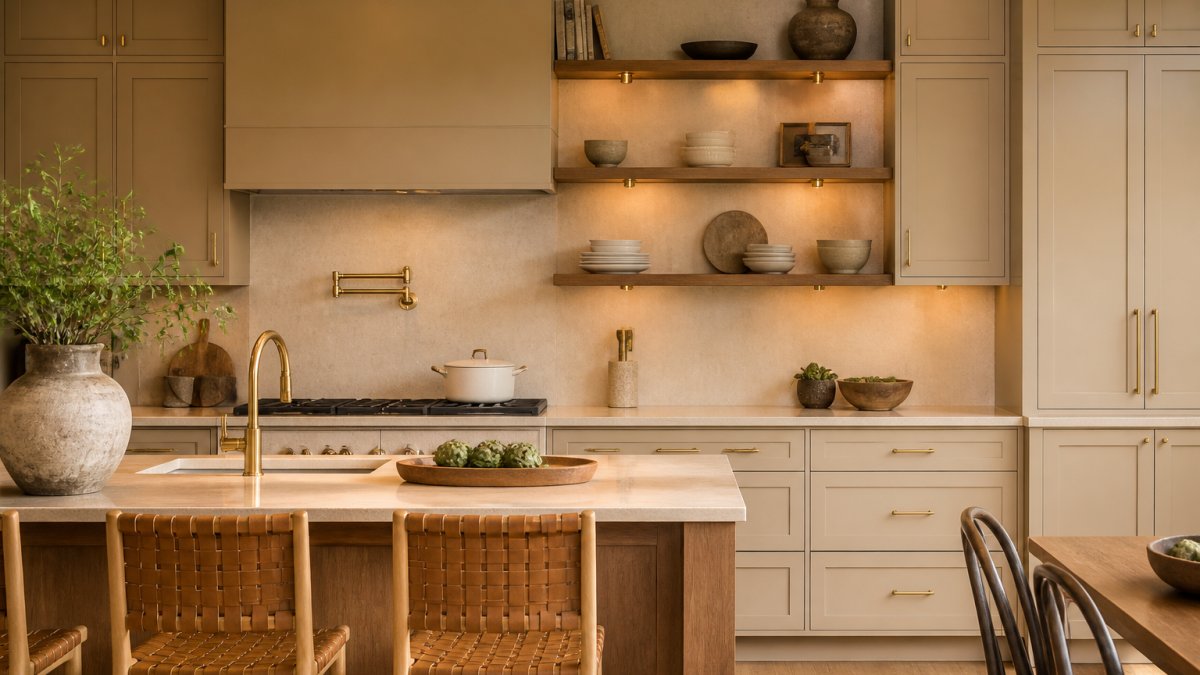
Why are earthy neutrals winning? They pair beautifully with natural materials, hide minor imperfections better than pure white, and create a canvas for layering textures and accent colors.
The practical advantage: warm neutrals work with nearly any countertop, flooring, or hardware finish, and they age well, unlike trendy colors that feel dated within five years.
One consideration: warm neutrals require intentional lighting. Soft ambient light and natural daylight enhance their warmth, while harsh overhead light flattens them.
Natural Wood Cabinetry and Timber Finishes
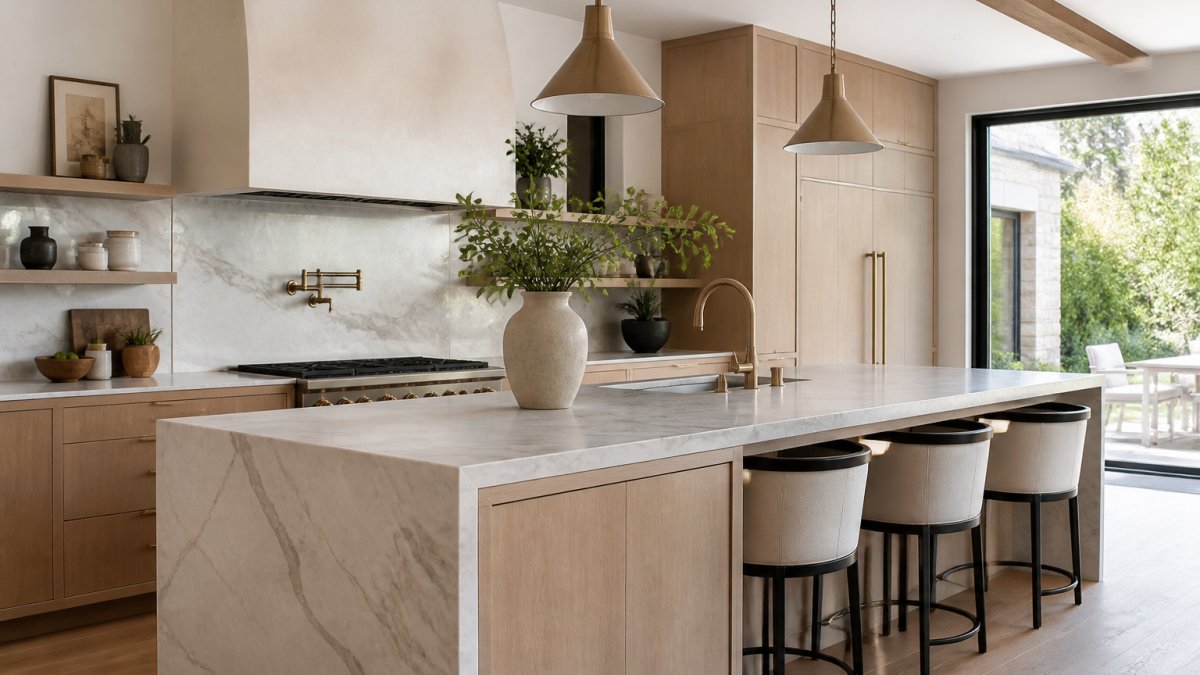
Natural wood kitchens are having a major moment. Homeowners are choosing walnut, oak, ash, and mixed-grain timber finishes that celebrate wood's character, grain variation, knots, and authentic patina, rather than hiding it.
Why timber finishes? They bring warmth manufactured materials can't replicate, and wood ages visibly, developing a richer appearance over time.
Natural wood cabinetry works best with refined hardware and clean lines, the wood itself is the statement. Matching timber open shelving creates visual continuity and draws the eye upward, making kitchens feel larger.
The maintenance reality: natural wood requires regular oiling, prompt spill cleanup, and protection from moisture. For heavy-use kitchens, discuss hybrid approaches with your designer, mixing wood cabinetry with durable laminate or veneer balances aesthetics and practicality.
For small kitchens, natural wood adds warmth without overwhelming. Lighter tones (ash, light oak) keep compact kitchens open, while darker woods (walnut) suit kitchens with good natural light and higher ceilings.
Bold Kitchen Color Trends for 2026
After years of neutral dominance, color is returning to kitchens. Deep blues, forest greens, charcoal blacks, and rich jewel tones are appearing on cabinetry, accent walls, and statement islands, saturated, confident colors that declare personality.
Deep blue kitchens evoke calm and sophistication. A navy or midnight blue island with warm wood and brass hardware feels both modern and timeless. Deep greens, forest, sage, hunter, bring nature in and pair naturally with wood and stone.
The bold color trend works because it's paired with restraint elsewhere. A bold island works best when surrounding cabinetry is neutral or natural wood, and a bold accent wall needs complementary hardware and countertops that don't compete.
Bold colors also affect resale. If resale value matters, use bold color on removable elements (hardware, textiles, open shelving) rather than built-in cabinetry, which a future buyer might find dated.
Two-Tone Cabinetry and Contrasting Finishes
Two-tone kitchens, contrasting cabinet colors or finishes, add visual interest and break up large spaces. Common combinations: natural wood or deep blue lower cabinets with light uppers, or matte finishes paired with glossy accents.
Why two-tone works: it creates visual hierarchy. Lower cabinets anchor the space while upper cabinets feel lighter and more open, making the kitchen feel intentional rather than monolithic.
The principle behind two-tone is balance. If lower cabinets are dark, uppers should be significantly lighter. When mixing finishes (matte and glossy, wood and painted), make the contrast clear enough to read as intentional, not accidental.
Two-tone also solves practical problems: lighter uppers feel less heavy and make kitchens appear taller, while darker lowers hide daily wear and ground the space visually.
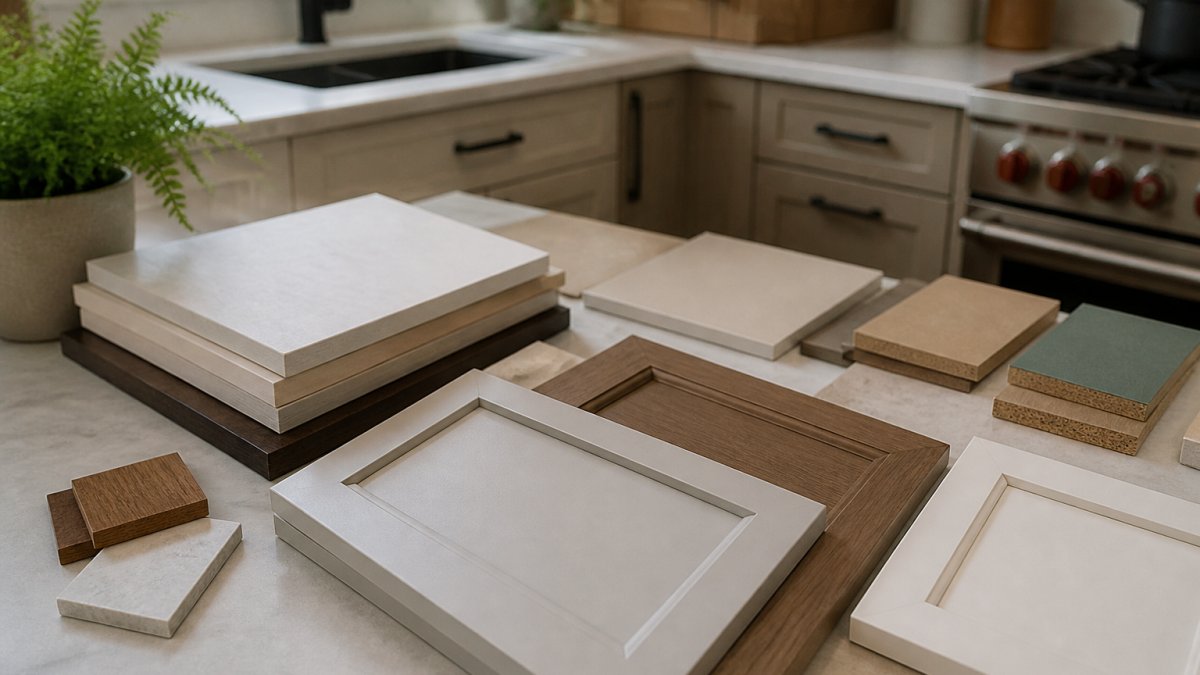
In small kitchens, two-tone can backfire if the contrast is too aggressive. A subtle pairing, warm beige lowers with cream uppers, or natural wood lowers with light gray uppers, adds interest without overwhelming. Test combinations with large samples in your actual kitchen lighting before committing.
Curved, Sculptural, and Softened Design Details
Straight lines are giving way to curves. Rounded cabinet edges, sculptural hardware, curved islands, and softened corners appear throughout 2026 kitchen design, a move toward humanized, craft-forward aesthetics that reject industrial minimalism.
Curved cabinetry costs more than flat-front designs, but the payoff is significant: a curved island becomes a sculptural centerpiece, and rounded edges soften the kitchen's geometry, making it feel more inviting.
Sculptural hardware, chunky brass pulls, organic shapes, statement handles, reinforces the craft-forward direction. Hardware has moved from invisible to intentional.
Curved details work best in kitchens with breathing room; in compact kitchens they can feel fussy. Limit curves to a single focal point, the island or a feature wall, rather than throughout.
The durability consideration: curved edges and sculptural details require precise fabrication and regular cleaning, since dust and fingerprints show more readily on curved surfaces. In a heavily used kitchen, balance them with easy-to-clean, simplified elements.
Small Kitchen Design Trends for 2026
Most trend coverage assumes a full-size kitchen with room to spare. In compact kitchens, rentals, condos, and basement suites, the same 2026 trends have to be adapted or they overwhelm the space. Here's how to apply them when a full renovation isn't practical.
Start with a color strategy that protects perceived space. Warm neutrals work in small kitchens because they recede visually and create a cohesive backdrop. Apply bold colors sparingly, a single accent wall, the island, or lower cabinetry only, and keep upper cabinets and walls neutral to preserve height and openness.
Choose light-to-medium timber tones. Ash, light oak, and honey-toned walnut feel warm without darkening the space. Reserve dark wood for accent elements, open shelving, a feature wall, or the island, rather than full cabinetry.
Use two-tone cabinetry to create a clear visual break. Light upper cabinets with natural wood or dark lower cabinets creates definition without clutter; avoid multiple color changes, which fragment a small space visually.
Limit sculptural details to one focal point. A curved island or a run of sculptural hardware on key cabinets adds character without overwhelming, while straight-lined upper cabinets keep the space feeling organized and open. Curved edges and chunky hardware are harder to clean, so balance them with simplified, easy-to-wipe surfaces elsewhere.
Lean on vertical storage and open shelving. Natural wood open shelving becomes both functional and decorative, displaying items that add warmth and personality while maximizing storage. Take shelving to the ceiling where possible and use the space above upper cabinets for infrequently used items rather than leaving it empty.
Budget reality for small kitchens. A cosmetic refresh, paint, hardware, lighting, and open shelving, is typically the lowest-cost path and can be done in stages. A partial renovation that keeps the existing layout and replaces cabinet fronts, countertop, and backsplash costs less than a full gut because it avoids plumbing and electrical relocation.
Maintenance in tight quarters. Small kitchens concentrate cooking grease, steam, and daily wear into a smaller area.
Timeless Kitchen Design Trends to Prioritize
A kitchen renovation is a major investment, and the most durable choices are rooted in timelessness rather than a single season's look. Here's how to tell lasting design from short-lived trends, and how bold personalization may affect future buyers.
Separate the trend from the trend's expression. Warm neutrals, natural wood, and good lighting are durable because they're rooted in how people actually use kitchens.
Prioritize quality materials where they matter most. Natural wood, stone countertops, solid hardware, and well-made cabinetry age gracefully and develop character rather than wearing out, while laminate, veneer, and budget hardware show their age faster, particularly in high-use zones like the sink, range, and dishwasher.
Keep geometry simple. Flat-front cabinetry, minimal ornamentation, and uncluttered layouts feel current year after year, while overly ornate kitchens date themselves within a few years and are harder to clean.
Use a neutral base with flexible accents. A kitchen with warm neutral cabinetry, natural wood accents, and neutral countertops can shift its personality through hardware, textiles, and open shelving.
Plan lighting as a long-term asset. Layered lighting, ambient, task, and accent, functions beautifully regardless of trends. A well-lit kitchen feels expensive and intentional, while poor lighting undermines even the best design. Wiring for layered lighting during a renovation is far cheaper than retrofitting it later.
Think about resale without letting it paralyze you. Bold personalization, deep blue cabinetry, a statement island, unusual tile, can narrow your buyer pool, but a kitchen with personality and intentional design often appeals to more buyers than a safe, generic space.
Match the kitchen to how you actually live. Functionality that fits your lifestyle is the most timeless choice of all. A kitchen designed around how you cook, eat, and gather will feel right for years, while a trendy kitchen that ignores your needs becomes frustrating quickly.
Maintenance and longevity by material. Natural wood requires regular oiling, prompt spill cleanup, and protection from moisture. Stone countertops vary widely in porosity and stain resistance, so ask about sealing requirements and re-sealing intervals.
A note on sustainability and sourcing. Durable, repairable materials are inherently more sustainable because they don't need replacing as often. Ask suppliers about recycled content, responsibly sourced timber, and whether finishes can be refinished or repaired rather than replaced. These choices align with the timeless approach: buy well, maintain it, and keep it longer.
Frequently Asked Questions
What are the trendy kitchen colors for 2026?
The dominant kitchen color trends for 2026 include warm, earthy neutrals like warm beige, soft taupe, and creamy whites that create a calm, inviting atmosphere. Bold jewel tones, particularly deep blues and deep greens, are gaining momentum for accent walls or cabinetry. Two-tone cabinetry combining light and dark finishes offers visual interest while maintaining balance. Monochromatic palettes with subtle variations in tone continue to appeal to homeowners seeking understated elegance and a camera-ready aesthetic.
Are warm, earthy neutrals still popular for kitchens in 2026?
Yes. Warm, earthy neutrals remain one of the strongest kitchen design trends for 2026. These tones, ranging from warm whites to soft greiges and natural wood tones, align with the broader shift toward natural materials and tactile textures. They provide a timeless foundation that pairs well with both minimalist and craft-focused design approaches, making them a durable choice for homeowners concerned about trend longevity and resale value.
What are some timeless kitchen design trends for 2026?
Timeless kitchen design trends for 2026 focus on quality materials and refined craftsmanship over fleeting aesthetics. Natural wood finishes, statement worktops with subtle veining, metal accents, and bespoke custom detailing create spaces that age gracefully. Open-concept layouts with thoughtful zoning, functional storage solutions, and clean lines remain enduring. Prioritizing durability and maintenance ease, choosing materials that resist staining and wear, ensures your kitchen stays both beautiful and practical for years to come.
How can I update my kitchen to reflect 2026 trends without a full renovation?
Strategic updates deliver significant impact without the cost and disruption of a full remodel. Replace cabinet hardware with modern metal accents, refresh cabinetry with a fresh paint color or stain in warm neutrals or bold tones, and upgrade countertops with statement worktops featuring subtle veining. Add open shelving to display curated items, introduce sculptural lighting fixtures, and incorporate natural materials through accessories or a feature wall. These targeted changes align your kitchen with 2026 design trends while preserving your existing layout and structure.