 listicle
Best Kitchen Cabinet Materials for High Humidity
Table of Contents
- Why High Humidity Wrecks Standard Kitchen Cabinets
- Plywood vs MDF Kitchen Cabinets: Which Core Handles Moisture Better?
- Solid Wood Cabinets in Humid Climates: What Actually Holds Up
- PVC, Thermofoil, and Laminate: Non-Wood Options Ranked
- Material Comparison Table: Moisture Resistance, Cost, and Lifecycle
- How to Keep Moisture Out of Cupboards: Construction and Ventilation Tactics
- How to Prevent Mold in Kitchen Cabinets Before It Starts
- Choosing the Right Material for Your Kitchen's Exposure Level
- Frequently Asked Questions
Last Updated: October 18, 2026
Why High Humidity Wrecks Standard Kitchen Cabinets
High humidity is the quiet enemy of kitchen cabinetry. It seeps into the core of a cabinet, not just the surface, and slowly changes how that material behaves.
Wood-based cabinet panels absorb moisture from the air, expand, and then shrink when the air dries out. That cycle repeats all year. Over time it shows up as warping, swelling at the seams, delamination of the face material, and a rough, raised grain under the finish.
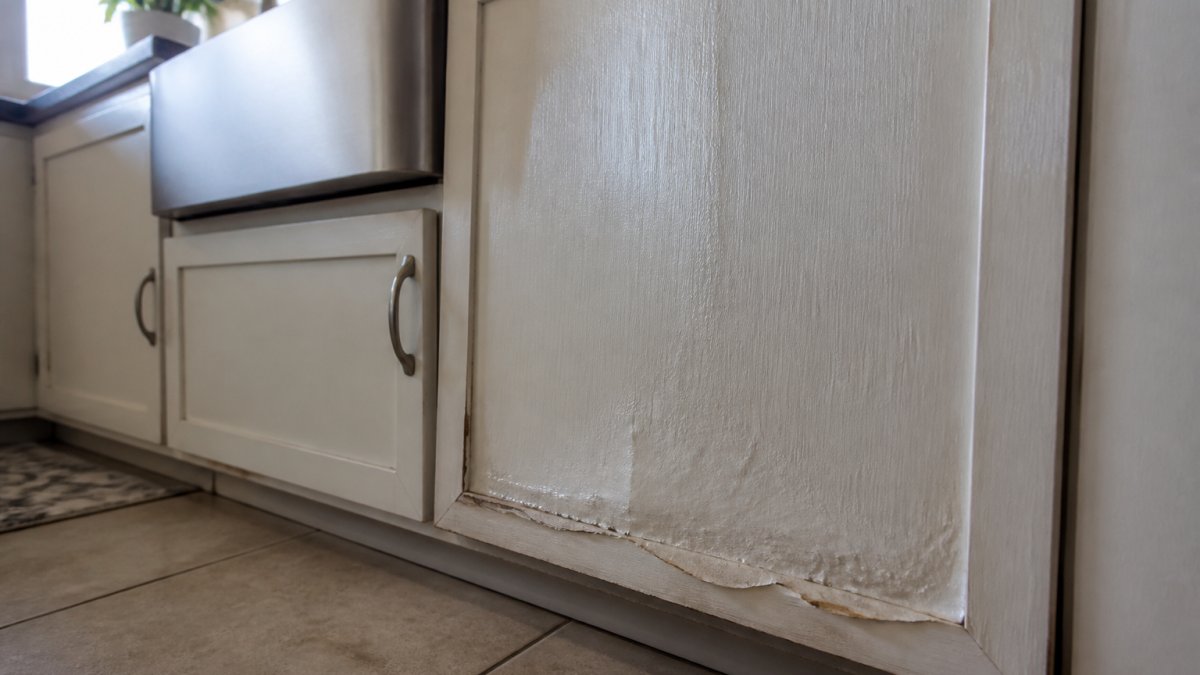
Plywood vs MDF Kitchen Cabinets: Which Core Handles Moisture Better?
Plywood generally handles moisture better than standard MDF because its layered construction resists the swelling that plagues a single pressed core. The difference comes down to how each material is built, not just what it is called. This is the comparison that matters most when you are choosing high humidity cabinets.
Marine-Grade Plywood and Layered Construction
Marine-grade plywood is built from multiple layers of wood veneer bonded with adhesives made to tolerate damp conditions. Those crossed layers help the panel resist the movement that causes warping. It is one of the strongest choices for cabinet boxes in a humid kitchen, and it pairs well with a moisture-resistant finish. The trade-off is cost and availability; not every supplier stocks it, and pricing varies widely by specification, so confirm the grade with your cabinet maker before you commit.
Moisture-Resistant MDF and Engineered Cores
Moisture-resistant MDF is a denser, treated version of standard MDF, and it performs better than the untreated product in damp air. Standard MDF, by contrast, is the material most likely to swell and crumble once water reaches an unsealed edge. Engineered cores are only as good as their edge sealing, which is why construction details matter as much as the material name.
Solid Wood Cabinets in Humid Climates: What Actually Holds Up
Solid wood cabinets can work in a humid climate, but only when the wood is properly sealed on every surface. Wood moves with humidity by nature, so the finish is doing the heavy lifting.
What most guides miss is that solid wood is not automatically the premium, worry-free choice. It is durable and repairable, but it demands a maintained protective coating. If a seal fails around a sink or a dishwasher, the wood underneath is exposed.
PVC, Thermofoil, and Laminate: Non-Wood Options Ranked
Non-wood and wrapped options remove the wood core from the moisture equation entirely, which is why they deserve a serious look in wet or steamy kitchens. They are not all equal, though. Here is how the main categories stack up for high humidity cabinets.
PVC and Vinyl-Wrapped Cabinets
PVC cabinets are described as fully waterproof, which makes them a strong pick for spaces where water exposure is a real risk. Vinyl-wrapped and thermofoil cabinets wrap a core in a sealed skin, so the surface shrugs off steam and splashes. The weak point is the seams and edges, where a wrap can lift if it is poorly applied. Buyers should ask about the quality of the wrap and how edges are finished.
High-Pressure and Low-Pressure Laminate Finishes
High-pressure laminate (HPL) is a dense, engineered surface that holds up well against moisture and daily wear. It is often recommended over standard particleboard for humid settings. Low-pressure laminate (LPL) and thermally fused laminate (TFL) are the more cost-conscious laminate options, and both offer moisture resistance at a lower price point. The difference is durability and how the surface handles heat and abrasion over time.
Material Comparison Table: Moisture Resistance, Cost, and Lifecycle
The table below ranks each material family on four consistent criteria so you can compare like with like instead of relying on marketing labels.
| Material | Ambient Humidity Tolerance | Direct/Standing Water Tolerance | Repairability | Expected Service Life (with sealed edges and ventilation) | Relative Upfront Cost |
|---|---|---|---|---|---|
| Marine-grade plywood | High | Moderate to high if edges sealed | Moderate (patch and reseal) | Long | Higher |
| Moisture-resistant MDF | Moderate to high | Low once an edge is exposed | Low (swelling is permanent) | Mid | Mid |
| Standard MDF | Low | Very low | Very low | Short in damp zones | Lower |
| Solid hardwood | Good when fully sealed | Low if the film fails | High (sand and refinish) | Long with upkeep | Higher |
| PVC / vinyl-wrapped | High | High on the face; low at lifted seams | Low (wrap cannot be spot-repaired invisibly) | Mid to long | Varies |
| High-pressure laminate (HPL) | High | High on the face; core still vulnerable at cutouts | Moderate (replace panel) | Long | Mid to high |
| Low-pressure laminate / TFL | Moderate | Moderate | Low | Mid | Lower |
| Stainless steel | High | High | Moderate (dent removal, not DIY) | Very long | Higher |
Three things the table cannot show, and they matter as much as the material name:
- Ambient humidity is not the same as a leak. A material rated high for ambient humidity can still fail if a supply line drips behind the cabinet for a month. Choose for the exposure you actually have, not the average.
- Edges and cutouts are the weak point on every wood-based core. A moisture-resistant MDF box with raw shelf-pin holes and an unsealed sink cutout will swell from those openings first. Sealed edges and sealed cutouts extend service life more than upgrading the core alone.
- Lifecycle cost is not the same as upfront cost. A lower-cost laminate that needs replacement in a wet zone can cost more over ten years than a higher-cost marine-grade plywood box that is sealed once and left alone. Factor in repair access, matching discontinued finishes, and labor to remove and reinstall.
Pricing varies by supplier, specification, and project scope, so we do not publish fixed figures. Ask your cabinet maker for a quote that lists the core, the edge treatment, and the finish system separately so you can compare bids on equal terms.
How to Keep Moisture Out of Cupboards: Construction and Ventilation Tactics
Keeping moisture out of cupboards is less about one magic material and more about blocking water at the edges and letting damp air escape. Two things do most of the work: sealed construction and airflow. Here is how it can be approached on a renovation.
- Seal every exposed edge on cabinet boxes, shelves, and door cores.
- Choose a moisture-resistant core for anything near a sink, dishwasher, or range.
- Leave a small gap behind base cabinets so air can move.
- Use an exhaust fan vented to the exterior, not just recirculating.
- Fix leaks and slow drips before they reach the cabinet base.
- Keep the room's humidity in check with ventilation during and after cooking.
How to Prevent Mold in Kitchen Cabinets Before It Starts
Preventing mold in kitchen cabinets starts with controlling moisture and airflow before mold ever has a chance to grow. Mold needs damp, still air. Remove either one and it struggles to take hold. The practical steps are straightforward.
- Vent cooking steam outdoors with a properly sized exhaust fan.
- Wipe up splashes and condensation promptly, especially under the sink.
- Avoid storing damp items inside closed cabinets.
- Check the cabinet base and back panel after any plumbing work.
- Keep the kitchen dry between uses with airflow and, where needed, a dehumidifier.
- Address any musty smell early; it usually signals trapped moisture.
If you already see discoloration or smell mildew, the priority is finding the water source. Cleaning the surface without fixing the cause lets the problem return. According to Health Canada's guidance on household mold, controlling moisture is the core of mold prevention, which is exactly why the material and ventilation choices in this guide matter.
Choosing the Right Material for Your Kitchen's Exposure Level
Choosing the right material comes down to matching it to how much moisture your kitchen actually sees, and to whether that moisture is ambient humidity or direct water.
| Exposure Level | What It Looks Like | Recommended Core and Finish | Construction and Installation Priorities |
|---|---|---|---|
| Low | Good ventilation, no water fixtures nearby, no history of condensation | Standard MDF or particleboard with sealed edges; laminate or painted finish | Seal all exposed edges and shelf-pin holes; leave a small air gap behind base cabinets |
| Moderate | Sink or dishwasher nearby, regular cooking steam, occasional splashes | Moisture-resistant MDF, HPL, or vinyl-wrapped boxes; sealed plywood where budget allows | Seal the sink cutout and the dishwasher alcove; use an exhaust fan vented outdoors; check the cabinet base after any plumbing work |
| High | Persistent damp, coastal air, heavy cooking, or a history of swelling and musty smells | Marine-grade plywood, PVC, or stainless steel; HPL faces on sealed cores | Seal every cutout and edge; specify corrosion-resistant hardware; plan airflow behind and under cabinets; consider a dehumidifier in the shoulder seasons |
Two practices matter as much as the material choice:
- Ventilation and airflow. An exhaust fan vented to the exterior removes cooking steam at the source. A recirculating fan moves air but does not remove moisture. Leaving a small gap behind base cabinets and keeping the toe-kick clear lets damp air escape instead of trapping it against the wall.
- Sealing around sinks and appliances. The sink cutout, the dishwasher alcove, and the range hood penetration are where water enters a cabinet box. Sealing those openings, and checking them after any plumbing work, prevents the slow leaks that cause most cabinet failures.
This is where working with an experienced renovator pays off. Our approach to Natural Resources Canada's guidance on home moisture and ventilation informs how we plan airflow in the spaces we renovate.
Frequently Asked Questions
What is the best material for kitchen cabinets in a humid environment?
Marine-grade plywood and PVC cabinets offer the strongest moisture resistance for high humidity cabinets. Marine-grade plywood uses layered construction that resists swelling better than standard particleboard, while PVC is described as fully waterproof. Solid hardwood with a proper sealant also performs well. Avoid standard MDF and particleboard unless they carry a moisture-resistant rating, and always pair any material with sealed edges and a protective finish.
How do plywood cabinets compare with MDF in high humidity?
Plywood's cross-layered veneer construction handles humidity fluctuations better than standard MDF, which can swell and crumble when water reaches its core. Moisture-resistant MDF offers improved performance but still relies on sealed edges and a protective coating. For kitchens with persistent dampness, plywood vs MDF kitchen cabinets usually tips toward plywood, especially marine-grade, because its layers resist warping and delamination more effectively over time.
Can solid wood kitchen cabinets warp in humid conditions?
Solid wood cabinets in humid climates can warp if the wood is not properly sealed. Wood naturally absorbs and releases moisture, causing expansion and contraction. A quality polyurethane or varnish finish on all surfaces, including inside the cabinet box, creates a moisture barrier that limits movement. Choosing a stable species and ensuring proper acclimation before installation also reduces the risk of warping and joint separation.
How can I prevent mold inside kitchen cabinets?
To prevent mold in kitchen cabinets, control moisture at the source. Fix leaks promptly, run the range hood during cooking, and wipe down condensation on cabinet surfaces. Leave cabinet doors open occasionally to improve airflow, and avoid storing damp items inside. Installing a moisture barrier on exterior walls behind cabinets and sealing edges with a protective coating further reduces the chance of mold and mildew growth in high humidity cabinets.
Are thermofoil cabinets moisture-resistant?
Thermofoil cabinets offer moderate moisture resistance because the vinyl film seals the MDF core from surface water. However, seams and edges can allow moisture to reach the core, causing swelling or delamination over time. In high humidity cabinets, thermofoil performs best in low-splash zones and when edges are sealed correctly. For sink bases or dishwashers, plywood or PVC construction is a more reliable choice.