 listicle
5 Best Bathroom Flooring Materials for Moisture
Table of Contents
- Porcelain Tile: The Gold Standard for Moisture Resistance
- Luxury Vinyl Plank vs. Ceramic Tile for Bathrooms
- How to Waterproof a Bathroom Shower Floor
- Natural Stone Tile: Premium Aesthetics and Durability
- Slip-Resistant Bathroom Flooring: Safety and Performance
- SPC Vinyl: Rigid Core Stability for Moisture-Prone Spaces
- Choosing the Right Material: Comparison and Maintenance
- Frequently Asked Questions
Last Updated: September 23, 2026
Porcelain Tile: The Gold Standard for Moisture Resistance
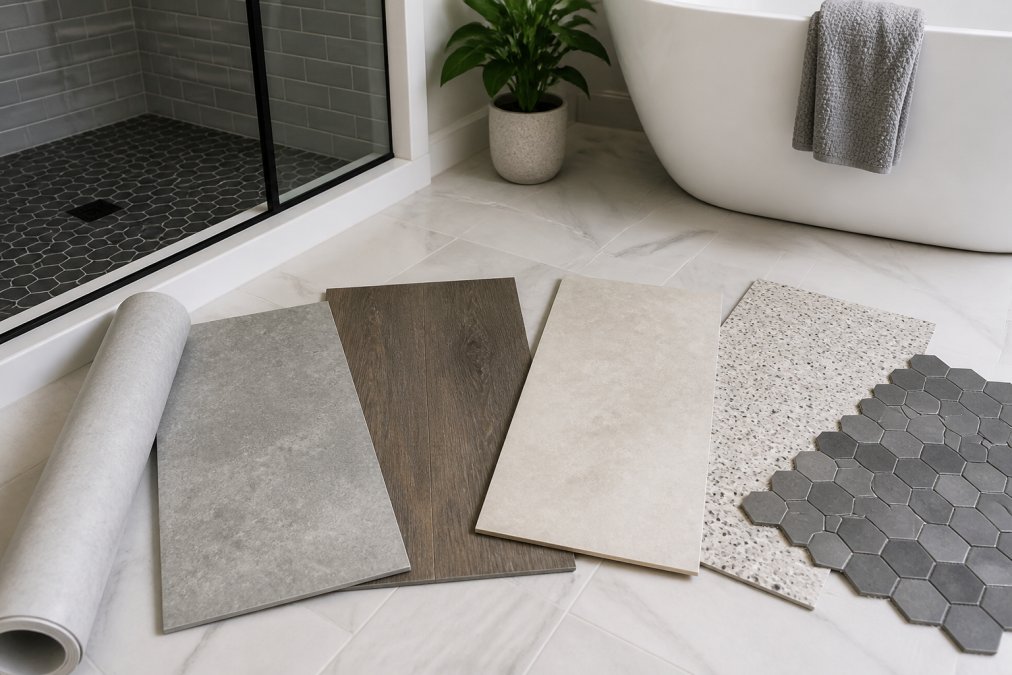
When evaluating the 5 best bathroom flooring materials for moisture, porcelain tile stands as the most reliable choice for bathrooms where moisture control is non-negotiable. This high-density, kiln-fired ceramic material is virtually impervious to water absorption, with rates below 0.5%. That's why it remains the top recommendation from renovation professionals across the region.
Porcelain tile delivers consistent performance over decades. The material resists scratches, heavy foot traffic, and the daily moisture exposure that breaks down lesser options. Available in slip-resistant textures, porcelain works equally well on walls and floors.
The tradeoff is real: porcelain can feel cold underfoot without radiant heating, and professional installation is essential. Grout lines require ongoing maintenance to prevent moisture buildup. But for bathrooms where water exposure is constant, the durability justifies the investment.
Best for: High-moisture areas, master bathrooms, shower floors Water absorption rate: Less than 0.5% Durability: 25+ years with proper sealing
Luxury Vinyl Plank vs. Ceramic Tile for Bathrooms
Luxury vinyl plank (LVP) and ceramic tile represent fundamentally different approaches to bathroom flooring, each with distinct moisture-handling mechanisms and long-term maintenance realities.
LVP offers 100% waterproof performance through multi-layer synthetic construction: a rigid core, click-lock installation, and often built-in underlayment for sound dampening. Water cannot penetrate the material itself. Installation takes hours, not days, and the click-lock system requires no adhesive, making it a viable DIY option for confident homeowners. The material mimics wood or stone aesthetics while maintaining waterproof integrity. Underfoot, LVP feels warmer and more forgiving than tile, with slight cushioning that reduces fatigue during extended standing and softens the impact if someone falls.
Ceramic tile, by contrast, is more porous than porcelain. Its glazed surface acts as a moisture barrier, but the tile body itself absorbs water at rates between 3% and 6%, roughly 10 times higher than porcelain. Ceramic works acceptably on walls and low-to-medium traffic floors, but it is unsuitable for shower bases or areas with constant water contact. The tile itself is not the problem; grout is.
The Grout Problem: Why Ceramic Tile Fails in Bathrooms
Grout is porous. Cement-based grout (the most common type) absorbs water like a sponge. Water migrates through unsealed grout into the substrate, causing mold, mildew, and structural damage behind walls. This is the primary reason ceramic tile bathrooms fail prematurely.
Once water penetrates grout, it reaches the subfloor. If the subfloor lacks a waterproof membrane (a common cost-cutting mistake), water rots wood framing, causes drywall deterioration, and creates conditions for black mold growth. Remediation costs can be substantial per affected wall. The tile itself may last 10-15 years, but hidden damage can occur much sooner.
Epoxy or urethane-based grout resists moisture penetration far better than cement-based varieties and lasts longer, but it costs 2-3 times more and requires skilled installation. Even with premium grout, sealing is mandatory: all grout lines must be sealed within 72 hours of installation, then resealed annually in high-moisture areas. This is not optional maintenance; it is the difference between a floor lasting 25 years and one failing in five.
LVP has no grout. There are no porous joints where water can hide and cause hidden damage. This eliminates the single largest maintenance burden of tile bathrooms.
Maintenance Reality and Total Cost of Ownership
Ceramic tile demands discipline. Beyond annual grout sealing, you must:
- Inspect grout lines quarterly for cracks or discoloration (signs of water penetration)
- Clean grout with a stiff brush and mild cleaner to prevent mold colonization
- Recaulk the perimeter where tile meets walls or fixtures (caulk fails before grout)
- Address any water stains or discoloration immediately, as they indicate moisture migration
LVP requires minimal maintenance: a damp mop and occasional spot cleaning suffice. No sealing, no grout inspection, no caulk replacement. The material is genuinely waterproof, not just water-resistant.
The Real Decision
For bathrooms where moisture control is the priority, LVP provides peace of mind that ceramic cannot match. You eliminate the grout maintenance burden and the risk of hidden water damage. The trade-off is aesthetic: ceramic offers more decorative variety and a more traditional tile appearance, but only if you accept ongoing maintenance discipline.
For vanity areas with occasional splash and low water contact, ceramic tile works fine if you commit to grout maintenance. For shower floors or tub surrounds where water contact is constant, ceramic tile is not recommended; porcelain tile or LVP are the appropriate choices.
When comparing cost, factor in the hidden expense of grout maintenance and potential water damage. A ceramic tile floor may cost less upfront, but annual sealing, periodic recaulking, and the risk of subfloor damage add significant long-term cost. LVP costs slightly more initially but eliminates these ongoing expenses.
| Attribute | Luxury Vinyl Plank | Ceramic Tile |
|---|---|---|
| Water Absorption | 0% (fully waterproof) | 3-6% (porous) |
| Grout Required | No | Yes (porous, requires sealing) |
| Annual Maintenance | Damp mop only | Grout sealing + inspection |
| Mold/Mildew Risk | Very low | High if grout unsealed |
| Subfloor Damage Risk | Minimal | High without waterproof membrane |
| Lifespan (with proper care) | 15-20 years | 10-15 years (ceramic); 25+ years (porcelain) |
| Installation Time | 4-8 hours | 2-3 days |
| DIY Feasibility | High (click-lock) | Low (requires skill) |
Best for: LVP is ideal for budget-conscious renovations, full bathrooms, and homeowners who want durability without the sealing ritual. Ceramic tile works for walls and low-splash areas only; for wet zones, specify porcelain instead.
How to Waterproof a Bathroom Shower Floor
Waterproofing begins before you choose flooring material. The subfloor preparation determines whether water damage occurs in five years or fifty.
Start with a proper substrate. Concrete or cement backer board handles moisture exposure better than standard drywall. Apply a waterproof membrane, either liquid-applied or sheet-based, to the entire shower floor and extend it up walls at least 12 inches. This barrier catches water that inevitably seeps past grout lines.
Slope matters. The floor should pitch toward the drain at a 1/4-inch drop per foot. Poor slope traps water, leading to mold and structural damage behind the walls. If your existing floor is flat, a sloped mortar bed corrects this before tile installation.
Grout selection is critical. Use epoxy or urethane-based grout rather than cement-based varieties. Epoxy grout resists moisture penetration far better and lasts longer. Seal all grout lines within 72 hours of installation, then reseal annually in high-moisture areas.
The final layer is the flooring material itself.
Natural Stone Tile: Premium Aesthetics and Durability
Natural stone, slate, travertine, marble, brings timeless elegance to luxury bathrooms. Each piece is unique, offering non-repeating patterns that manufactured materials cannot match. The material's thermal mass works beautifully with radiant floor heating systems.
Slip-Resistant Bathroom Flooring: Safety and Performance
Slip resistance is often overlooked until someone falls. The coefficient of friction (COF) measures how much grip a surface provides, and bathroom flooring must meet specific safety thresholds to reduce fall risk, a leading cause of injury in residential bathrooms.
SPC Vinyl: Rigid Core Stability for Moisture-Prone Spaces
Stone Plastic Composite (SPC) vinyl represents the latest evolution in waterproof flooring. The rigid core prevents movement and telegraphing of subfloor imperfections, a common problem with softer vinyl products.
Choosing the Right Material: Comparison and Maintenance
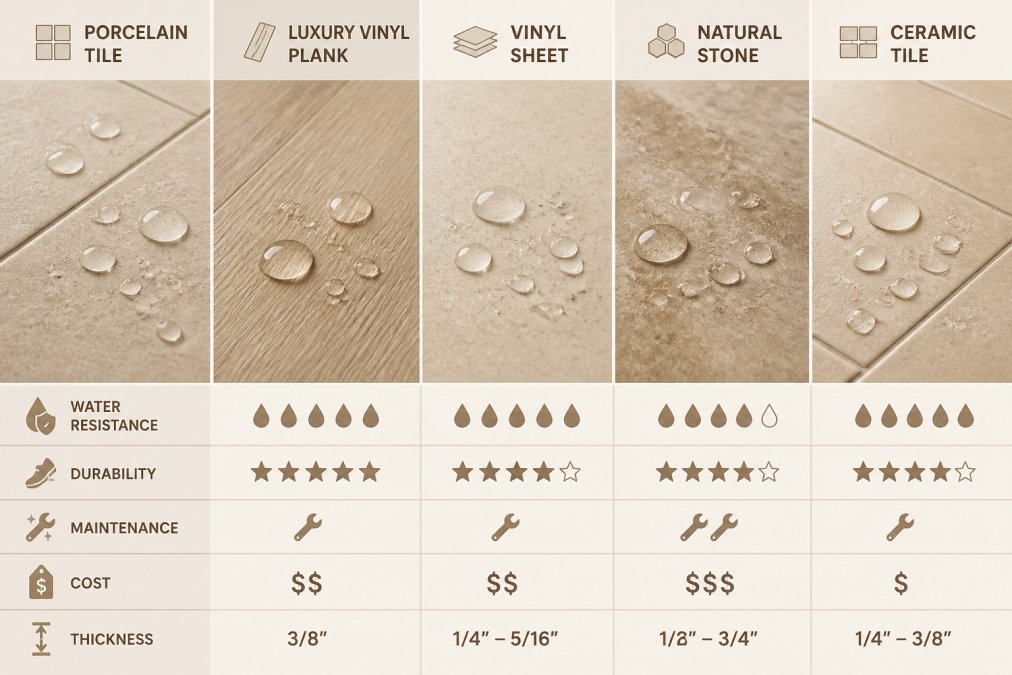
| Material | Water Absorption | Slip Resistance | Maintenance | Lifespan | Best Use |
|---|---|---|---|---|---|
| Porcelain Tile | <0.5% | High (textured) | Grout sealing annually | 25+ years | Shower floors, high-moisture |
| Ceramic Tile | 3-6% | Medium | Grout sealing 2x yearly | 10-15 years | Walls, low-traffic floors |
| Luxury Vinyl Plank | 0% | High | Damp mop only | 15-20 years | Budget-conscious, warm feel |
| Natural Stone | 2-5% | High (honed) | Professional sealing annually | 50+ years | Luxury bathrooms |
| SPC Vinyl | 0% | Medium-high | Damp mop only | 15-20 years | Full bathrooms, stability |
Frequently Asked Questions
What type of flooring is best for a bathroom floor?
Porcelain tile is the top choice for bathrooms because it has a water absorption rate below 0.5%, making it nearly impervious to moisture. Luxury vinyl plank and SPC vinyl are excellent alternatives if you want a warmer feel underfoot and easier installation. The best option depends on your budget, aesthetic preference, and whether the space experiences high moisture or just occasional splashes.
How do I waterproof a bathroom shower floor properly?
Start with proper subfloor preparation: install a waterproof underlayment or membrane before laying any flooring material. Use porcelain tile with epoxy grout, which is more water-resistant than standard grout. Seal all grout lines after installation and maintain regular sealing annually. Ensure proper slope for drainage and install a quality shower pan or waterproofing liner beneath the surface. Professional installation is recommended for shower floors to prevent water intrusion.
Is luxury vinyl plank or ceramic tile better for bathrooms?
Luxury vinyl plank offers 100% waterproof protection, easier installation, and a warm feel underfoot, making it ideal for budget-conscious renovations and DIY projects. Ceramic tile is more cost-effective upfront and highly customizable but more porous than porcelain and requires regular grout sealing. For high-moisture areas like shower floors, porcelain tile outperforms both. Choose LVP for comfort and ease; choose ceramic for design flexibility on lower-moisture walls.
What slip-resistant bathroom flooring options are available?
Porcelain tile with a textured or honed finish provides excellent slip resistance through a higher coefficient of friction (COF). Natural stone like slate offers inherent slip resistance due to its uneven surface. SPC vinyl and luxury vinyl plank both come in slip-resistant variants. Avoid polished finishes on any material in wet areas. Look for products rated for slip resistance; proper grout texture and maintenance also improve safety underfoot.