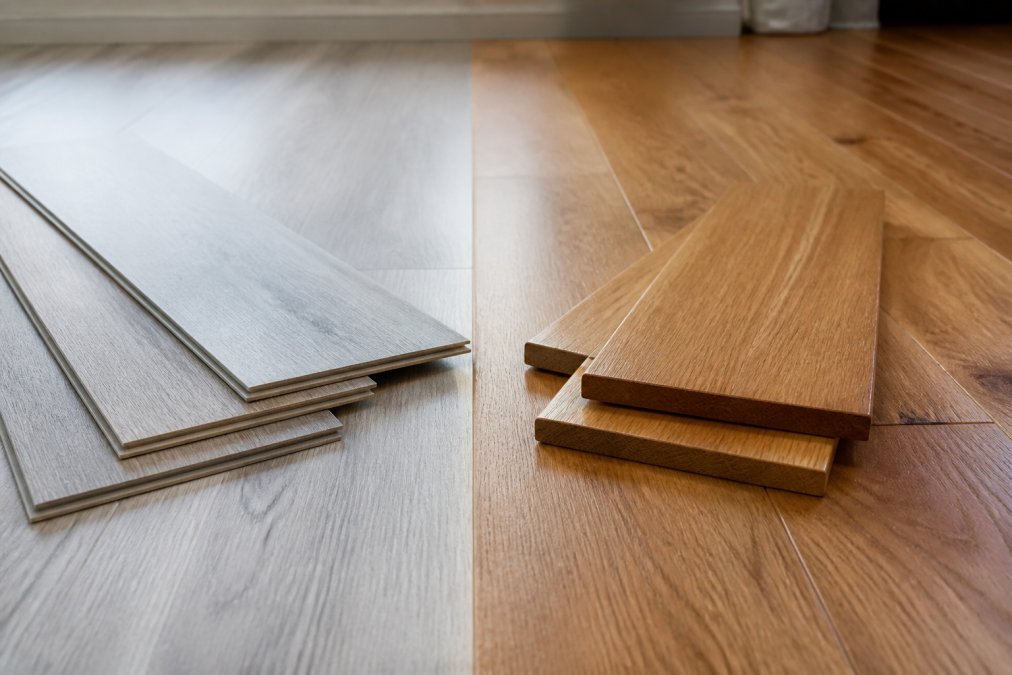
 comparison
Laminate vs Hardwood Flooring for Kitchens: 2026 Guide
Table of Contents
- Laminate vs Hardwood Flooring for Kitchens: Quick Comparison
- Cost of Hardwood vs Laminate Installation in 2026
- Best Waterproof Flooring for Kitchens: What Actually Works
- Hardwood Flooring Maintenance Tips for Kitchen Environments
- Resale Value and ROI: Which Flooring Adds More Home Equity?
- Which One Should You Pick? A Decision Framework
- Frequently Asked Questions
Last Updated: September 22, 2026
Laminate vs Hardwood Flooring for Kitchens: Quick Comparison
Laminate vs hardwood flooring for kitchens comes down to a simple trade-off: laminate is a photographic wood look built on a fiberboard core, while hardwood is solid or engineered wood that can be sanded and refinished. At Restmark Renovations, we install both, and the deciding factor is almost never appearance. It is moisture.
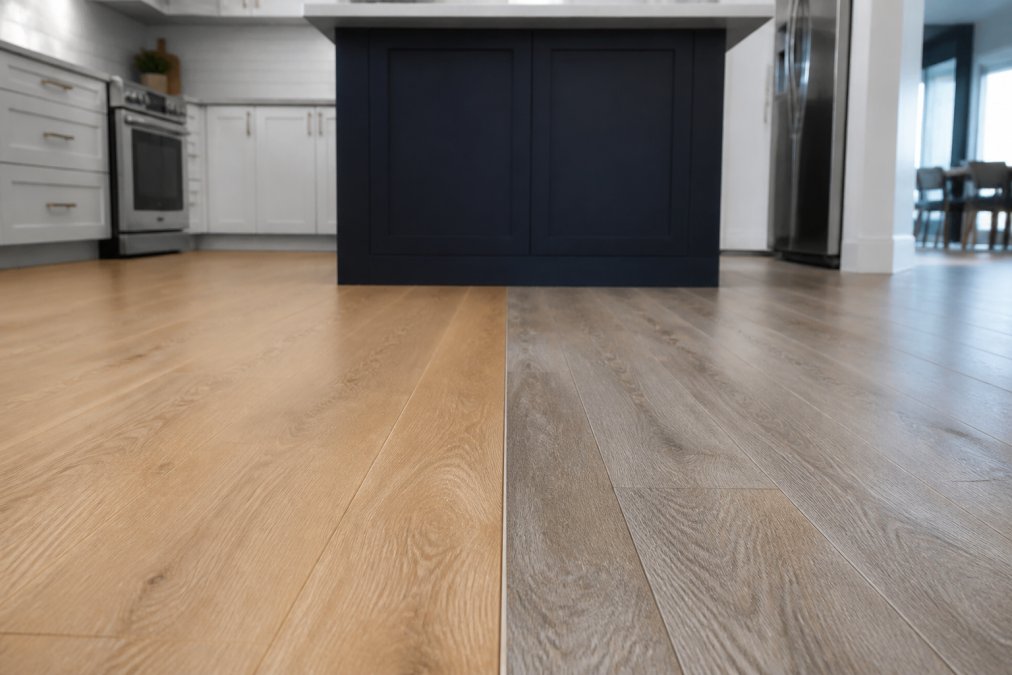
Here is the uncomfortable truth most buying guides skip: neither laminate nor solid hardwood is a waterproof kitchen floor.
| Factor | Laminate | Hardwood (Solid or Engineered) |
|---|---|---|
| Typical installed cost | Lower upfront | Higher upfront |
| Water resistance | Swells at seams if liquid seeps in | Sensitive to humidity and standing water |
| Refinishing | Cannot be refinished | Solid can be sanded multiple times |
| Scratch resistance | High on quality wear layers | Moderate; dents and scratches show |
| Resale appeal | Neutral to positive | Strong positive in most markets |
| Best for | Budget kitchens, rentals, quick updates | Long-term value, open-plan main floors |
Cost at a Glance
Laminate generally costs less per square foot than hardwood, both in material and installation. Hardwood carries a higher material cost and often a longer install time, which adds labor. For a kitchen-sized area, that gap can be significant, but the hardwood floor is also the one you can refinish instead of replace.
Durability and Moisture Resistance
Durability splits into two different questions. Laminate resists scratches and dents well because of its wear layer, but its core swells when water reaches the seams. Hardwood resists daily scuffs less gracefully, yet engineered hardwood handles humidity swings better than solid planks.
Cost of Hardwood vs Laminate Installation in 2026
The cost of hardwood vs laminate installation depends on material grade, subfloor condition, and whether you are removing an existing floor. Laminate typically lands at the lower end of the range, while solid hardwood sits at the higher end, with engineered hardwood falling between them.
| Cost Component | Laminate | Engineered Hardwood | Solid Hardwood |
|---|---|---|---|
| Material only | $2-$5/sq ft | $5-$9/sq ft | $8-$15/sq ft |
| Underlayment | $0.50-$1.50/sq ft | $1-$2/sq ft | $1-$2/sq ft |
| Installation labor | $2-$4/sq ft | $3-$6/sq ft | $4-$8/sq ft |
| Subfloor prep (if needed) | $1-$3/sq ft | $1-$3/sq ft | $1-$3/sq ft |
| Old floor removal & disposal | $1-$2/sq ft | $1-$2/sq ft | $1-$2/sq ft |
| Typical installed total | $6-$12/sq ft | $10-$20/sq ft | $14-$28/sq ft |
What Actually Drives the Number
- Material grade and species: Laminate runs from budget to mid-range per square foot; solid hardwood runs considerably higher, especially for exotic species like Brazilian cherry or hickory. Domestic red oak and maple sit at the lower end of the hardwood range.
- Subfloor prep: Older homes often need leveling or repair before any new floor goes down.
- Removal and disposal: Tearing out tile or glued-down flooring adds labor and dump fees. Tile removal is the most expensive because of the thinset and backer board.
- Trim and transitions: Doorway transitions and baseboard reinstallation are easy to underestimate.
- Stair nose and custom pieces:
The ROI Math Most Guides Skip
A laminate floor at $1,200 installed versus a solid hardwood floor at $3,000 installed is a $1,800 difference. That means hardwood can pay for itself, but only if you stay long enough and your market rewards real wood.
Best Waterproof Flooring for Kitchens: What Actually Works
The best waterproof flooring for kitchens is luxury vinyl plank or tile, not laminate or hardwood. If genuine wood appearance matters more than absolute water resistance, engineered hardwood with a quality finish is the strongest compromise.
- Luxury vinyl plank (LVP): Fully water-resistant core, comfortable underfoot, realistic wood textures.
- Porcelain tile: Effectively waterproof, extremely durable, but cold and hard underfoot.
- Engineered hardwood: Real wood surface, better moisture stability than solid, still needs prompt cleanup.
Hardwood Flooring Maintenance Tips for Kitchen Environments
Hardwood flooring maintenance tips for kitchens start with one rule: manage water before it manages your floor. A few habits keep a wood kitchen floor looking sharp for years.
- Wipe spills within minutes, not hours.
- Use a mat at the sink and dishwasher to catch drips.
- Keep indoor humidity stable; wood expands and contracts with seasonal swings.
- Sweep or vacuum grit daily so it does not act like sandpaper underfoot.
- Never wet-mop; use a barely damp cloth and a wood-safe cleaner.
- Recoat the finish every few years before the wood itself is exposed.
Resale Value and ROI: Which Flooring Adds More Home Equity?
Hardwood generally returns more at resale than laminate, particularly in older homes where buyers expect character finishes. Laminate does not hurt resale, but it rarely becomes a selling point the way real wood does.
Buyer Personas Change the Answer
First-time homebuyer (entry-level detached or townhouse): They are budget-focused and often stretched thin. Laminate in good condition reads as "move-in ready" and does not scare them off. Hardwood is nice but rarely the deciding factor at this price point. Laminate wins on ROI here because you spend less and still sell.
Market Conditions Matter Too
In a balanced or buyer's market, buyers have choices and finish quality becomes a tiebreaker. Hardwood helps you win that tiebreak. In a hot seller's market, almost anything sells, and the hardwood premium shrinks because buyers are competing on price and speed, not finishes.
A Simple ROI Checklist
Before you decide, answer these four questions:
- What is the most likely buyer for my home? (First-time, move-up, downsizer, investor.)
- What do comparable homes on my street have? If most have hardwood, laminate is a downgrade. If most have laminate, hardwood is an upgrade.
- How long until I sell? Under three years favors laminate. Over five years favors hardwood.
- What is my kitchen's role? If it is open to the main living area, matching the existing hardwood floor matters more than if it is a closed-off galley.
If you answer those four honestly, the flooring decision usually makes itself.
Which One Should You Pick? A Decision Framework
Use this framework to decide quickly. Answer the questions in order, and stop at the first match.
Choose hardwood if:
- You plan to stay in the home long term.
- Your kitchen is open to the main living area and you want visual continuity.
- You value the ability to refinish rather than replace.
- Your budget allows for the higher upfront cost.
Choose laminate if:
- You need a fast, budget-conscious update.
- The kitchen is a rental or a short-term flip.
- You want strong scratch resistance in a busy household.
- You accept that water damage means board replacement.
Choose luxury vinyl instead if:
- Your kitchen sees heavy water use.
- You want wood look without the moisture risk.
- You want the easiest possible maintenance.
Frequently Asked Questions
Is laminate flooring waterproof enough for a kitchen?
Most standard laminate flooring is water-resistant, not waterproof. It handles everyday spills fine if wiped up quickly, but standing water can seep into the joints and cause the high-density fiberboard core to swell. If your kitchen sees frequent splashes near the sink or dishwasher, look for laminate labeled waterproof with sealed joints, or consider luxury vinyl instead. For the best waterproof flooring for kitchens, properly installed tile or luxury vinyl plank remains the most reliable choice.
Does hardwood flooring hold up to kitchen spills and moisture?
Solid hardwood is sensitive to moisture and humidity swings. A spilled glass of water wiped up promptly is not a problem, but repeated pooling near the sink or dishwasher can cause warping, cupping, and gaping between boards. Engineered hardwood handles kitchen humidity better because its multi-ply construction resists expansion and contraction. Whichever you choose, seal seams properly and address leaks immediately to protect your investment.
Which kitchen flooring option offers better resale value?
Hardwood generally delivers stronger resale value. Buyers and appraisers recognize real wood as a premium feature that contributes to property value and marketability. Solid hardwood can also be sanded and refinished multiple times, extending its lifespan across decades. Laminate costs less upfront and looks good, but it does not carry the same weight in a home appraisal. If maximizing return on investment matters most, hardwood is the stronger long-term play.
How do maintenance requirements differ between laminate and hardwood?
Laminate is easier day to day: sweep or vacuum, then damp-mop with a manufacturer-approved cleaner. Never wet-mop it, since excess water damages the core. Hardwood flooring maintenance tips include dry-mopping frequently, using a slightly damp cloth for spot cleaning, and reapplying protective finish every few years. Keep both floors dry, use felt pads under furniture legs, and place mats near the sink and dishwasher to reduce wear.
Can you install hardwood in a kitchen with high humidity?
Yes, with the right product and precautions. Engineered hardwood is the better choice for humid kitchens because its layered construction resists the expansion and contraction that causes solid planks to cup or gap. Acclimate the flooring to your home's conditions before installation, maintain indoor humidity between 35 and 55 percent year-round, and fix plumbing leaks immediately. Proper waterproofing and expansion gaps at the perimeter also help prevent moisture-related damage.