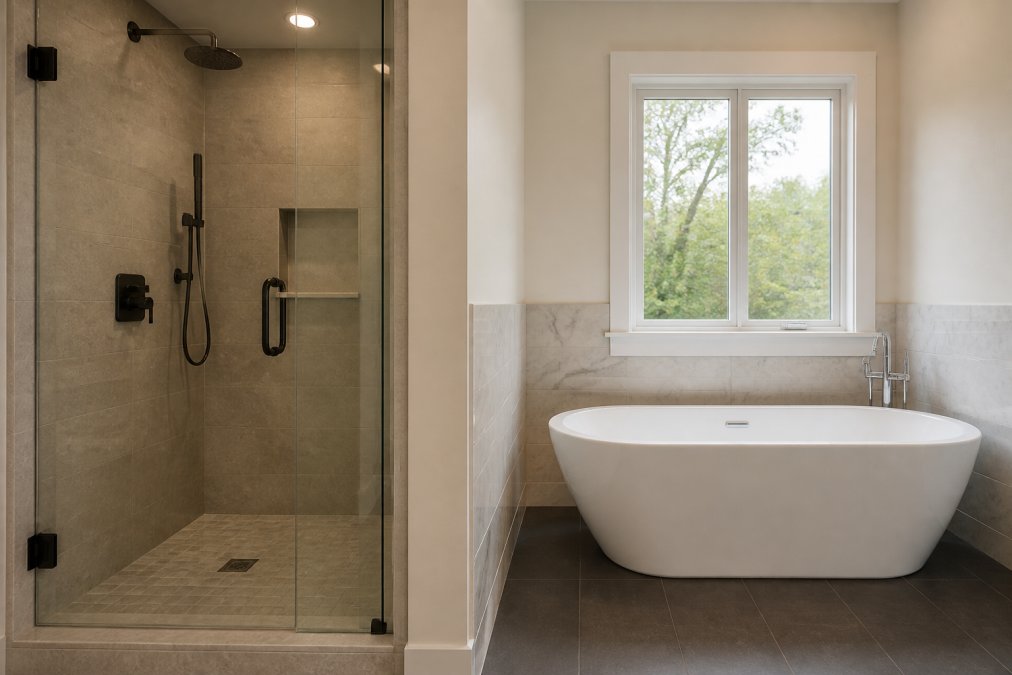
 comparison
Walk-In Shower vs Bathtub: Resale Value Guide
Table of Contents
- Walk-In Shower vs Bathtub: Quick Comparison
- What Buyers Actually Want: Bathroom Preferences by Demographics
- Bathtub Removal Pros and Cons for Home Value
- Cost of Walk-In Shower Installation vs Bathtub
- Bathroom Renovation ROI: Which Option Wins?
- Space, Accessibility, and Modern Design Trends
- Making Your Decision: Master Suite vs Guest Bath
- Frequently Asked Questions
Last Updated: September 22, 2026
Walk-In Shower vs Bathtub: Quick Comparison
When you're deciding on a walk-in shower vs bathtub, whether to convert a bathtub to a walk-in shower or keep the tub, you're really asking: what will sell my home faster and for more money? The answer isn't one-size-fits-all. It depends on your buyer demographics, your market, and what's already in your bathroom.
The tension is real: modern buyers love the luxury and accessibility of a walk-in shower, but families with young children and aging parents still expect at least one functional bathtub. Both have genuine resale value and drawbacks.
Here's what the decision typically comes down to: a walk-in shower appeals to smaller households and younger professionals who prioritize modern aesthetics and low maintenance. A bathtub (or a hybrid walk-in tub) appeals to families and aging-in-place buyers who need functional soaking space and accessible entry. The right choice depends on which buyer profile matches your neighborhood's property values and demographics.
| Feature | Walk-In Shower | Traditional Bathtub | Hybrid Walk-In Tub |
|---|---|---|---|
| Appeal to Young Professionals | High | Moderate | Low |
| Family-Friendly | Moderate | High | High |
| Aging-in-Place Features | High (with grab bars) | Low | High |
| Space Required | 36-48 sq ft | 30-40 sq ft | 40-50 sq ft |
| Installation Cost | Moderate | Low | High |
| Maintenance | Low | Moderate | Moderate |
| Resale Value Impact | Strong (modern markets) | Strong (family markets) | Strong (accessibility-focused) |
What Buyers Actually Want: Bathroom Preferences by Demographics
Your target buyer's age, family status, and lifestyle determine what bathroom feature moves the needle on resale value.
Young professionals and empty nesters (ages 25-45) gravitate toward walk-in showers, valuing modern aesthetics and low maintenance. A sleek walk-in shower signals a recently updated home; this demographic often views a bathtub as outdated space.
Families with children (ages 30-50) need at least one functional bathtub for young kids. Parents in family-oriented neighborhoods expect a tub in the master or guest bath; removing the only tub can hurt resale value.
Aging-in-place buyers (ages 55+) prioritize accessibility. A standard bathtub with high sides becomes a safety liability; a walk-in tub or walk-in shower with grab bars and low threshold addresses their concerns. This growing demographic increasingly values accessibility features.
Your neighborhood's demographic profile determines which feature buyers value most: urban condos attract young professionals who want showers; suburban family homes need at least one tub; retirement communities benefit from accessibility-focused designs.
Bathtub Removal Pros and Cons for Home Value
Removing a bathtub to install a walk-in shower can increase your home's appeal, or decrease it, depending on context.
Pros of removing the tub:
A walk-in shower modernizes the bathroom instantly, signaling recent renovation. A frameless glass enclosure, contemporary tile, and updated fixtures read as luxury to modern buyers and often justify a higher asking price in urban markets.
Walk-in showers reduce long-term maintenance: no caulking, soap scum, or mold-prone grout lines. Solid-surface systems (like MAAX Utile) are easier to clean than tile, appealing to buyers concerned about upkeep.
Cons of removing the tub:
In family-oriented neighborhoods, removing the only bathtub creates a red flag. Parents with young children may eliminate your home from consideration, and appraisers often dock resale value when a home has zero bathtubs.
Tub removal requires structural work, plumbing rerouting, waterproofing, tile removal, that can exceed simple tub replacement cost and may not deliver expected ROI on a tight budget.
The safest play: keep at least one bathtub if you have multiple bathrooms, or convert a secondary bath to a shower while maintaining a tub in the master suite. This hedges your bet and appeals to a broader buyer pool.
Cost of Walk-In Shower Installation vs Bathtub
Installation costs vary by materials, labour rates, structural complexity, and region. Understanding the breakdown helps you evaluate ROI in your specific market.
Bathtub replacement (like-for-like swap):
Bathtub replacement is the most straightforward renovation when plumbing and alcove are sound. Typical costs:
- Standard acrylic or fibreglass tub: $800-$2,000 (material only)
- Labour (removal, installation, caulking, minor plumbing adjustments): $500-$1,500
- Total: $1,300-$3,500
Add $500-$1,500 for tile repair or plumbing rerouting. Premium soaking tubs or walk-in tubs cost $2,500-$6,000 in materials, pushing total to $3,500-$8,000.
Walk-in shower conversion (full renovation):
Walk-in shower conversion requires plumbing reroute, floor slope for drainage, and critical waterproofing. Typical costs:
- Demolition and disposal: $300-$800
- Plumbing reroute (drain relocation, supply lines): $800-$1,500
- Framing and waterproofing: $600-$1,200
- Tile or solid-surface walls: $1,500-$3,500 (depending on material and square footage)
- Fixtures (showerhead, valve, grab bars): $400-$1,500
- Labour (skilled trades, multiple visits): $2,000-$4,000
- Total: $5,600-$12,500
Premium finishes (large-format porcelain tile, custom glass, high-end fixtures) can push costs to $15,000-$20,000.
Material cost variance by region:
Labour rates vary by region: major urban centres charge $50-$85/hour for skilled trades versus $35-$60/hour in smaller markets. Shipping and local markup can add 10-20% in remote areas.
Solid-surface systems (like MAAX Utile or Kohler LuxStone) cost $2,500-$4,500 upfront but require less maintenance than tile, reducing grout lines, mold risk, and cleaning time, appealing to buyers concerned about upkeep.
Tile options: ceramic ($1,500-$2,500), porcelain ($2,000-$3,500), or large-format ($3,500-$5,500). Larger tiles with fewer grout lines read as more modern to buyers.
Fixture and hardware costs:
Fixtures vary: basic systems cost $200-$400; mid-range finishes run $500-$1,000; premium systems reach $1,500-$3,000. Grab bars and accessibility hardware add $200-$600.
Hidden costs to budget for:
Hidden costs: structural repairs ($1,000-$3,000), ventilation upgrades ($400-$800), electrical work ($300-$600).
Cost comparison summary:
Bathtub replacement is 3-4 times cheaper than walk-in conversion, but resale impact isn't proportional. Walk-in showers deliver stronger appeal in urban markets; family markets get better ROI from keeping a tub.
Getting accurate quotes for your home:
Request itemized quotes from at least two licensed contractors. Ask about plumbing reroute costs, waterproofing method and warranty, material options, timeline, and labour/material warranties.
A professional contractor can assess your specific bathroom layout, identify hidden costs, and recommend the renovation approach that delivers the best ROI for your market and home type.
Bathroom Renovation ROI: Which Option Wins?
ROI varies by region, home type, and market conditions. Real ROI depends on renovation cost, home value, and target buyer expectations in your specific market.
How to calculate your actual ROI:
Bathtub replacement costs $1,500-$3,500; walk-in conversion with mid-range finishes costs $4,500-$8,000; premium showers reach $10,000-$15,000+.
Research comparable homes sold in the past 6 months. Did homes with updated walk-in showers sell faster or for more? This local data is more predictive than national averages.
Consider buyer profile: urban markets recover 65-75% of walk-in shower costs because buyers seek modern bathrooms. Suburban family markets need at least one tub; removing it reduces appeal and negates ROI.
Regional variance matters more than you think:
Major metros favour walk-in showers (younger, urban buyers); suburban and rural markets expect at least one tub. A walk-in shower in the master paired with a tub in the guest bath delivers strongest ROI.
Climate influences ROI: harsh winters favour soaking tubs; high water-cost areas favour low-flow walk-in showers.
The strategic ROI winner:
With two or more bathrooms, converting one to a luxury walk-in shower while keeping a tub elsewhere delivers strongest resale return.
Use this framework to estimate your specific ROI:
- Get contractor quotes for your specific renovation (walk-in shower vs. tub replacement).
- Research 5-10 comparable homes in your neighbourhood that sold in the past 6 months. Note which had updated bathrooms and how long they took to sell.
- Estimate the likely resale value increase based on local market trends (typically $2,000-$8,000 for a bathroom update, depending on the market).
- Subtract your renovation cost from the estimated resale increase. If the number is positive and significant, the ROI justifies the work. If it's marginal or negative, reconsider.
Space, Accessibility, and Modern Design Trends
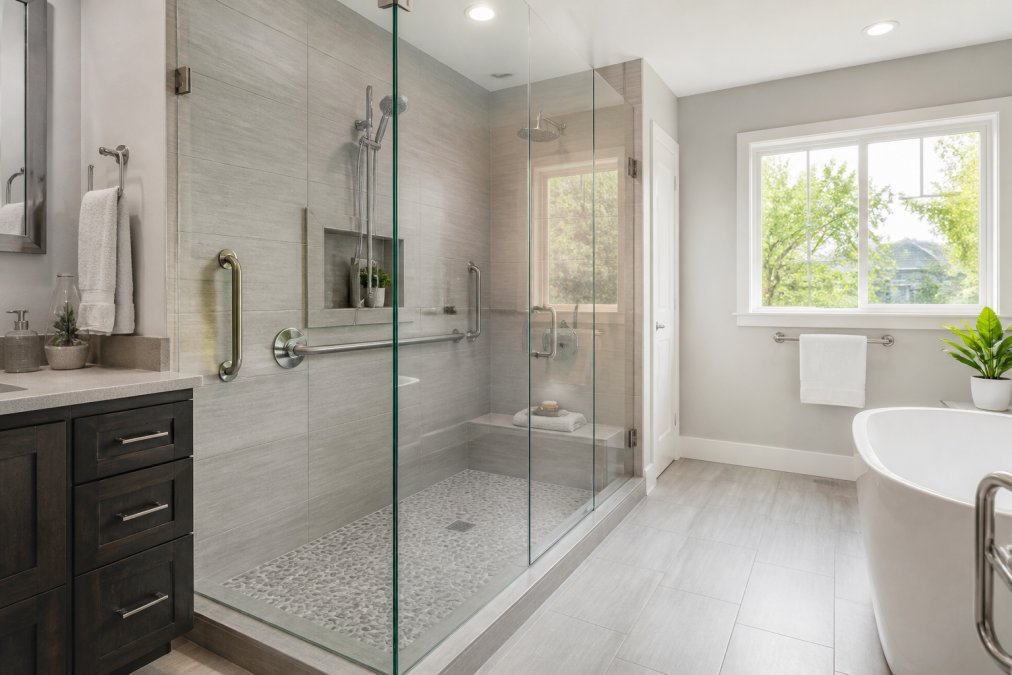
Modern bathroom design increasingly prioritizes accessibility without sacrificing style. A walk-in shower with grab bars and non-slip flooring isn't just functional, it's a selling point.
Making Your Decision: Master Suite vs Guest Bath
The location of your renovation shapes the decision more than you might think.
Frequently Asked Questions
Is it better to have a walk-in shower or bathtub for resale value?
Neither option is universally better, it depends on your target buyer and bathroom location. Families with young children and aging parents often prioritize having at least one bathtub in the home, while younger buyers and empty nesters prefer walk-in showers for their modern aesthetic and accessibility. Master bathrooms typically benefit more from walk-in showers, while guest bathrooms or homes with multiple full baths can afford to remove a tub. A professional home appraisal will reflect local market preferences.
What is the resale value impact of a walk-in shower?
A well-executed walk-in shower renovation can improve property appeal and perceived home value, particularly in master bathrooms. The actual return on investment depends on the quality of materials, professional installation, and whether the conversion maintains functional bathroom layout. Walk-in showers with high-end finishes and accessibility features (curbless entry, grab bars) appeal to a wider buyer demographic, potentially increasing marketability. However, removing the only bathtub in a home may limit buyer interest among families.
Does removing a bathtub to install a walk-in shower hurt home value?
Removing a bathtub can hurt resale value if it's the only tub in a single-bathroom or two-bathroom home, as families often view at least one bathtub as essential. However, removing a second or third bathtub to add a luxury walk-in shower typically has a neutral or positive impact. The key is understanding your local market and target buyer profile. A professional renovation contractor can assess whether removal makes sense for your specific property and neighborhood.
Is it cheaper to install a walk-in shower or a bathtub?
Walk-in showers generally cost less to install than high-end soaking tubs or walk-in tubs with accessibility features. However, the total cost depends on materials, plumbing complexity, and whether you're converting an existing space or building new. Basic bathtub installation is typically less expensive than a premium walk-in shower with custom tile or solid-surface walls. For accurate pricing tailored to your project scope and home layout, contact a professional bathroom renovation contractor for a detailed estimate.
Should families keep a bathtub in their home?
Most families with young children benefit from having at least one bathtub for bathing and cleaning. However, families can also use walk-in showers with handheld showerheads and non-slip flooring. The decision depends on your household's actual needs and your home's resale strategy. If you're planning to sell within 5-10 years, keeping at least one bathtub in a family-sized home may broaden your buyer pool. If you're staying long-term, prioritize what works best for your daily lifestyle.