 listicle
7 Ways to Maximize Storage in Small Kitchens
Table of Contents
- 1. Use Vertical Storage for Kitchens with Wall-Mounted Racks and Shelving
- 2. Implement Custom Kitchen Cabinet Storage Solutions
- 3. Optimize Kitchen Layout and Workflow for Better Space Efficiency
- 4. Maximize Under-Sink and Corner Cabinet Space
- 5. Use Hanging Storage for Pots, Pans, and Utensils
- 6. Declutter and Organize Drawers and Shelves Strategically
- 7. Install Pull-Down Organizers and Lazy Susans for Accessibility
- Frequently Asked Questions
Last Updated: September 30, 2026
Small kitchens demand creativity. Without careful planning, even modest cooking spaces feel cramped and chaotic. The challenge isn't just fitting appliances and cookware into tight quarters, it's doing so without sacrificing function or aesthetics. This guide covers 7 ways to maximize storage in small kitchens.
The right storage strategy can double your usable kitchen space without renovation. Whether you're working with a galley kitchen, a corner nook, or an open-concept area with limited cabinetry, these seven approaches address the most common pain points: wasted vertical space, inaccessible corners, cluttered drawers, and underutilized walls.
1. Use Vertical Storage for Kitchens with Wall-Mounted Racks and Shelving
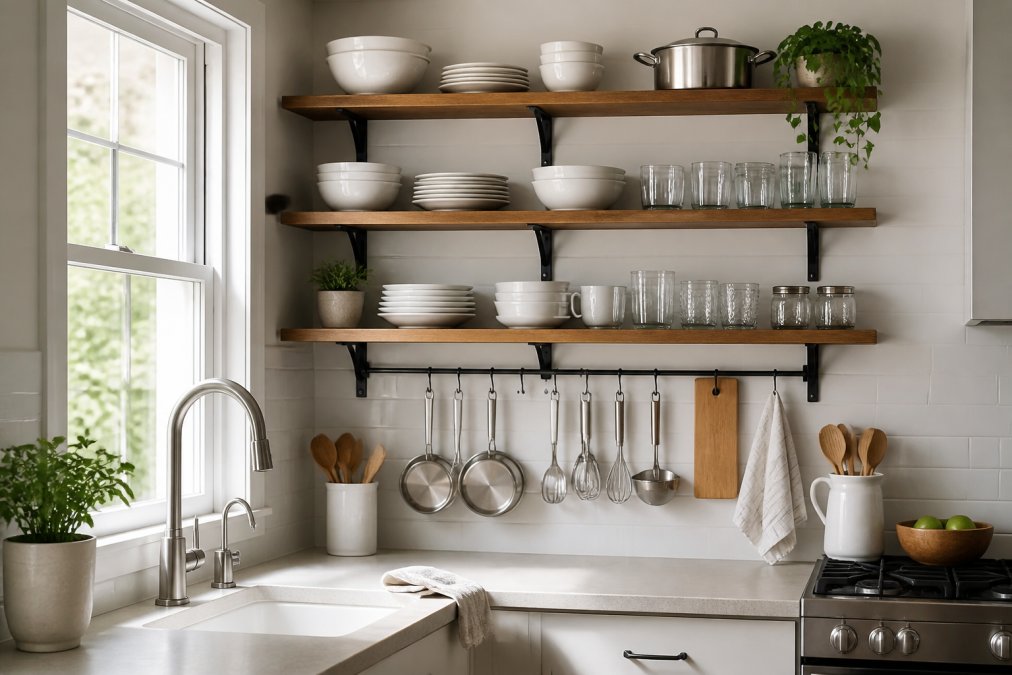
Wall-mounted storage is the fastest way to reclaim counter and cabinet space. Vertical storage for kitchens transforms unused wall real estate into functional zones for everyday items.
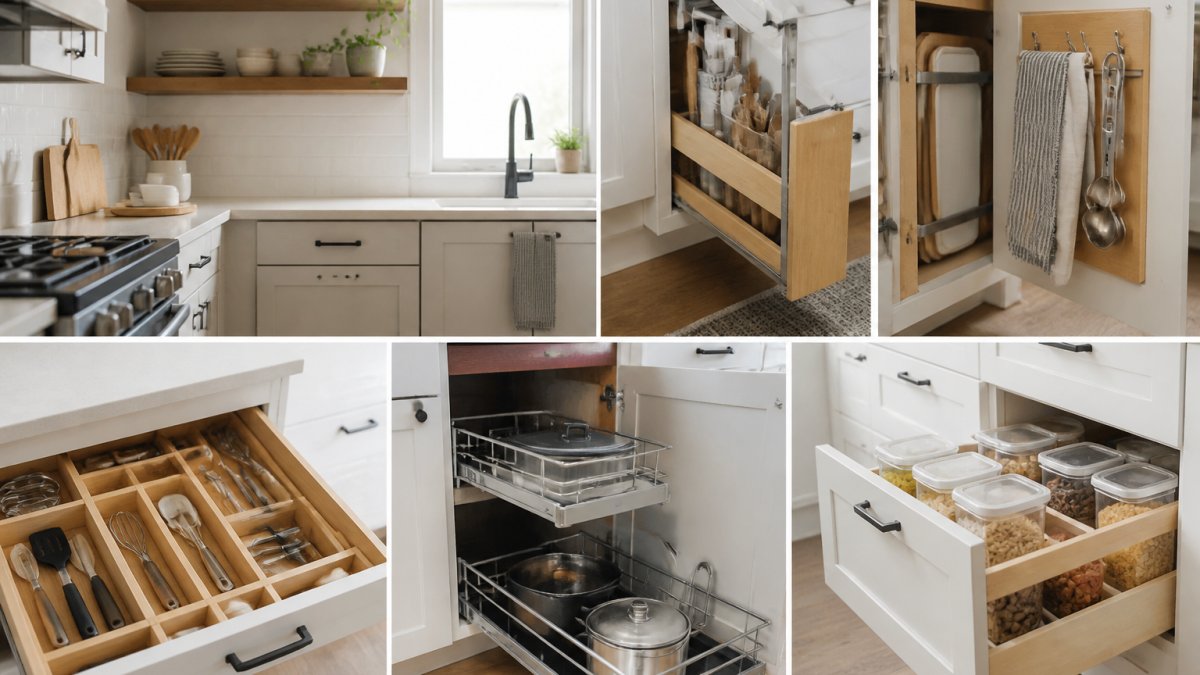
Install open shelving above countertops or along blank walls to display frequently used dishes, glasses, and cookbooks. This approach serves double duty: it clears cabinet clutter while adding visual interest. Wall-mounted racks designed for spices, utensils, or small appliances keep essentials within arm's reach without consuming valuable drawer or shelf space.
The Container Store's guide to kitchen organization emphasizes that vertical storage works best when items are both functional and visually cohesive. Mismatched clutter on open shelves feels cramped; organized, intentional displays feel intentional and spacious.
For renters or those hesitant about permanent installation, adhesive-backed hooks and removable shelving systems offer the same benefit without damage. Command Adhesive Hooks ($6.50 per pack) mount instantly to walls or cabinet doors and remove cleanly. The Elfa Kitchen Door & Wall Rack system ($110) provides modular, adjustable storage that installs to doors or walls and can be taken down without leaving marks.
2. Implement Custom Kitchen Cabinet Storage Solutions
Cabinet space is precious in small kitchens, so every inch must work harder. Custom kitchen cabinet storage solutions maximize depth and height by adding layers inside existing cabinetry.
Shelf risers and stackable inserts transform single shelves into dual-level storage. The IKEA VARIERA Shelf Insert ($8.99) is a budget-friendly metal insert that creates a second tier inside standard cabinets, instantly doubling storage capacity for lightweight items like plates, bowls, or cereal boxes. Pair these with drawer dividers to prevent the avalanche effect when you open a crowded cabinet.
For deeper cabinets where items disappear into the back, pull-out organizers are game-changers. The Rev-A-Shelf Pull-Out Cabinet Organizer ($125) uses heavy-duty ball-bearing slides to convert a dark, unreachable cabinet into an accessible drawer. Installation requires drilling and some mechanical skill, but the payoff is significant: items that were previously lost in shadows become instantly visible and reachable.
Food storage containers are a common culprit in cabinet chaos. The YouCopia StoraStack ($25) organizes plastic containers and lids vertically, preventing the typical drawer situation where lids scatter everywhere. Its adjustable dividers fit various container sizes, and the compact footprint means it occupies minimal cabinet real estate while holding far more than a loose stack.
3. Optimize Kitchen Layout and Workflow for Better Space Efficiency
Storage isn't just about adding shelves, it's about arranging your kitchen so items live where you use them. Kitchen layout optimization reduces wasted movement and makes the space feel larger because nothing is in the way.
Group related items together in zones: cooking tools near the stove, prep items near the cutting board, serving pieces near the dining area. This "activity-based" layout means fewer trips across a cramped kitchen and less time searching for what you need.
Pay attention to kitchen workflow, the path you naturally follow when cooking. In a small kitchen, this path is compressed, so every item should live along it or in a logical cluster. Spices belong near the stove. Glasses belong near the sink or fridge. Baking supplies belong together, separate from everyday cooking tools.
The National Kitchen & Bath Association guidelines on kitchen design recommend that the three main work zones (sink, stove, refrigerator) form a triangle, with storage distributed accordingly. In small kitchens, this triangle is tighter, but the principle remains: minimize the distance between where you prep, cook, and clean.
Consider which items you truly use daily versus weekly or monthly. Daily-use items earn premium real estate at eye level or within one step. Everything else can live higher, lower, or in less accessible spots. This simple rule prevents small kitchens from feeling suffocating.
4. Maximize Under-Sink and Corner Cabinet Space
The space under the sink is often wasted on cleaning supplies and a tangle of pipes. Maximize under-sink and corner cabinet space by installing organizers that work around plumbing.
Tiered shelf risers fit around pipes and create usable surface area for cleaning products, trash bags, or recycling containers. Sliding drawer organizers pull out to reveal items stored in the back, eliminating the "reach and hope" situation where you can't see what's behind the front row.
Corner cabinets present a different challenge: deep, hard-to-reach spaces where items vanish. A lazy susan turntable ($15-$25) solves this instantly. Place it on the corner shelf, load it with spices, canned goods, or condiments, and rotate to access everything. The 360-degree rotation eliminates blind spots that corner cabinets naturally create.
For corners that are too awkward for a turntable, pull-down organizers work better. The Rubbermaid Pull-Down Cabinet Organizer ($85) uses a soft-close mechanism to bring high-up storage within reach, reducing the need for a step stool and improving safety in a compact kitchen.
5. Use Hanging Storage for Pots, Pans, and Utensils
Bulky cookware occupies enormous cabinet space. Hanging storage for pots, pans, and utensils clears base cabinets and keeps frequently used items visible and accessible.
Wall-mounted pot racks or magnetic strips move cast iron, stainless steel, and copper cookware off shelves and onto walls. The Umbra Pot Rack ($55) includes sliding hooks and mounts to walls or ceilings, making it suitable for kitchens with high ceilings or limited wall space. It's also decorative, industrial-style pot racks have become a design feature in modern kitchens.
Magnetic strips work for metal utensils, knives, and small appliances. The Simplehuman Magnetic Spice Rack ($35) mounts to refrigerator sides or metal backsplashes, freeing drawer space while keeping spices within reach during cooking. This approach works only if you have a magnetic surface available, but it's a clean, minimal solution that takes seconds to install.
Hanging rails with S-hooks offer flexibility: they accommodate whatever you need to hang, and you can rearrange as your needs change. These rails cost $20-$40 and mount to any wall with studs.
6. Declutter and Organize Drawers and Shelves Strategically
Even with perfect storage systems, drawers and shelves accumulate clutter. Declutter and organize drawers and shelves strategically to prevent the chaos that small kitchens amplify.
Start with a ruthless inventory: pull everything from one drawer or shelf and sort into three piles, keep, donate, and discard. Small kitchens can't afford to store "just in case" items. If you haven't used it in a year, it's taking up space that a frequently used item could occupy.
Organize the remaining items by frequency of use. Daily-use items go in the most accessible spots. Weekly-use items go in secondary locations. Seasonal or occasional-use items go in the hardest-to-reach places. This simple rule prevents you from wasting prime real estate on things you rarely touch.
Use dividers to create zones within drawers. Utensil organizers prevent the jumble where spatulas, wooden spoons, and tongs tangle together. Drawer dividers for baking tools, measuring cups, or gadgets keep related items grouped and easy to find.
Label shelves and containers so you know what's where at a glance.
7. Install Pull-Down Organizers and Lazy Susans for Accessibility
High shelves and ceiling-height cabinets offer storage, but they're useless if you can't reach them safely. Pull-down organizers and lazy susans make upper storage accessible and functional.
Frequently Asked Questions
What are the most effective ways to maximize storage in a small kitchen?
The most effective approaches combine vertical storage, custom kitchen cabinet storage solutions, and smart organization. Wall-mounted racks, pull-out organizers, and hanging storage for pots and pans can significantly increase capacity. Lazy Susans in corners and under-sink organizers help reclaim dead space. The key is using every available surface, walls, doors, and ceiling height, while keeping frequently used items accessible for efficient workflow.
How can I add more storage to a kitchen with limited cabinetry?
Install wall-mounted shelving and hanging rails to create vertical storage without taking up floor space. Use the inside of cabinet doors with adhesive hooks or small racks. Add shelf risers inside existing cabinets to double your storage capacity. Consider a pot rack mounted to the ceiling or wall to free up base cabinet space. Open shelving above countertops and under-sink pull-out organizers also maximize functionality in tight layouts.
Are there specific storage solutions for small kitchen corners?
Corner cabinets are notoriously difficult to access, but lazy Susans solve this problem by rotating items into view. Pull-out corner organizers and diagonal racks designed for corner spaces also work well. Vertical shelf risers inside corner cabinets increase usable levels. If you're open to renovation, custom kitchen cabinet storage solutions tailored to your corner dimensions can transform these awkward spaces into highly functional storage zones.
What's the best way to organize a small kitchen to maximize efficiency?
Start by decluttering, remove items you don't use regularly. Group similar items together and store them near their point of use. Keep everyday dishes and utensils at eye level for quick access. Use drawer dividers and vertical organizers to prevent clutter. Adopt a kitchen layout optimization strategy that minimizes movement between sink, stove, and prep areas. Clear countertops of non-essentials to make the space feel larger and more functional.