 how-to
How to Save on Kitchen Renovation Materials
Table of Contents
- Set Your Renovation Budget and Define Your Priorities
- How to Save Money on Kitchen Cabinets
- Affordable Kitchen Countertop Materials
- Cheap Kitchen Flooring Ideas
- Kitchen Renovation Material Cost Breakdown
- Paint Walls and Cabinets for a Low-Cost Refresh
- Replace Hardware and Fixtures to Maximize Impact
- Build Your Sourcing and Purchasing Workflow
- Frequently Asked Questions
Last Updated: October 11, 2026
Set Your Renovation Budget and Define Your Priorities
The first step to save on kitchen renovation materials is deciding what you actually need to change, not what sounds nice.
List what bothers you most: awkward layout, dated cabinets, damaged countertops. Focus your budget on real problems instead of spreading money thin.
Break your budget into tiers:
- Essential repairs (structural issues, plumbing, electrical)
- Functional upgrades (cabinets, counters, appliances)
- Aesthetic improvements (paint, hardware, backsplash)
Allocate 50% to essentials, 35% to functional upgrades, and 15% to aesthetics.
How to Save Money on Kitchen Cabinets
Cabinets typically consume 30-40% of a kitchen renovation budget. Cutting costs here makes the biggest impact without sacrificing quality.
Refinish or Reface Existing Cabinets
Cabinet refacing costs far less than replacement. Instead of removing and disposing of old cabinets, you keep the structure and update the exterior.
Refacing replaces doors, drawer fronts, and hardware while keeping existing boxes in place. Installation is faster and costs roughly half that of new cabinetry.
Refinishing (stripping, sanding, repainting) works if the structure is solid but the finish is worn, costing far less than replacement.
Choose Ready-to-Assemble Options
Ready-to-assemble cabinets cost less than custom options. Quality varies widely; check reviews and inspect samples. Look for solid wood or quality plywood, adjustable shelves, soft-close hinges, and warranty coverage.
Shop Clearance and Second-Hand Sources
Building material auctions, salvage yards, and online marketplaces offer steep discounts. Clearance cabinets (floor models, returns, discontinued styles) save 40-50% off retail.
When buying second-hand:
- Inspect for damage, warping, or missing hardware
- Confirm all pieces are included before purchase
- Verify dimensions match your kitchen layout
- Check that hinges and slides function smoothly
Affordable Kitchen Countertop Materials
Countertops are visible and functional. Comparing lifecycle cost, purchase price plus maintenance and repairs over 20-30 years, reveals which materials truly save money.
Material Comparison: Upfront Cost, Durability, and Lifecycle Value
Laminate
- Upfront cost: $30-$60 per square foot installed
- Lifespan: 10-15 years
- Maintenance: Wipe clean with mild soap; avoid abrasive scrubbers
- Durability: Prone to scratches, water damage at seams, and delamination if exposed to moisture
- Repair: Not repairable; requires full replacement of damaged section or entire countertop
- Lifecycle cost (20 years): $60-$120 per square foot (one full replacement)
- Best for: Renters, temporary kitchens, or tight budgets with low-use kitchens
Solid Surface (Corian, Wilsonart)
- Upfront cost: $60-$100 per square foot installed
- Lifespan: 20-30 years
- Durability: Stain and scratch-resistant; non-porous; can be sanded and refinished
- Lifecycle cost (20 years): $60-$100 per square foot (refinishing $200-$500 total)
- Best for: Mid-range durability with easy maintenance
Quartz (Engineered Stone)
- Upfront cost: $80-$150 per square foot installed
- Lifespan: 25-30+ years
- Maintenance: Wipe clean; avoid bleach and acidic cleaners (they can dull the finish)
- Durability: Non-porous, extremely scratch-resistant, heat-resistant to 150°C (use trivets for hot pans)
- Repair: Not repairable; chips or cracks require professional replacement of the damaged section
- Lifecycle cost (20 years): $80-$150 per square foot (no replacement needed; minimal maintenance costs)
- Best for: High-use kitchens, busy families, and homeowners who value durability and low maintenance
Granite
- Upfront cost: $75-$200 per square foot installed (varies by colour and rarity)
- Lifespan: 30+ years
- Maintenance: Requires sealing every 1-3 years ($150-$300 per sealing); wipe spills immediately to prevent staining
- Durability: Naturally hard and heat-resistant; can chip if struck; porous, so stains can penetrate if not sealed
- Repair: Chips can be filled; cracks require professional repair or section replacement
- Lifecycle cost (20 years): $95-$260 per square foot (sealing costs $300-$1,200 over 20 years; potential repairs $200-$500)
- Best for: Homeowners who appreciate natural stone aesthetics and are willing to maintain sealing schedules
Butcher Block (Solid Wood)
- Upfront cost: $40-$100 per square foot installed
- Lifespan: 10-20 years (with proper care)
- Durability: Warm aesthetic; requires monthly oiling and refinishing every 3-5 years
- Lifecycle cost (20 years): $70-$180 per square foot (refinishing $600-$3,200)
- Best for: Homeowners committed to regular maintenance
Concrete
- Upfront cost: $65-$150 per square foot installed
- Lifespan: 20-30 years
- Durability: Customizable; can crack; requires sealing every 1-2 years
- Lifecycle cost (20 years): $95-$210 per square foot (sealing $300-$900)
- Best for: Industrial aesthetics with commitment to maintenance
Where to Save and Where to Splurge
Save on countertops if: light-to-moderate use, moving within 10 years, willing to refinish regularly, or tight budget.
Splurge on countertops if: heavy use, staying 15+ years, low-maintenance priority, or resale value matters.
Budget-Friendly Alternatives
Budget alternatives: peel-and-stick overlays ($15-$30/sq. ft.), tile ($25-$60/sq. ft.), or laminate with edge banding ($30-$50/sq. ft.). Track maintenance costs; a cheaper countertop requiring annual sealing may cost more over time than a durable option.
Cheap Kitchen Flooring Ideas
Flooring covers a large area. Material choice affects both budget and durability significantly.
Vinyl plank flooring mimics wood or stone at a fraction of the cost. Modern vinyl is waterproof, durable, and easy to install. Luxury vinyl plank (LVP) looks realistic and holds up well in kitchens.
Ceramic tile is affordable and extremely durable. Grout lines require maintenance, but tile lasts indefinitely. Larger tiles reduce grout lines and create a cleaner look.
Laminate flooring is budget-friendly but less water-resistant than vinyl or tile. In kitchens, it works in areas away from the sink.
Your flooring options ranked by cost:
- Vinyl plank (lowest cost, waterproof, easy install)
- Ceramic tile (low-moderate cost, extremely durable)
- Laminate (low cost, less water-resistant)
- Engineered hardwood (moderate cost, some water resistance)
- Solid hardwood (highest cost, requires sealing)
Kitchen Renovation Material Cost Breakdown
Understanding where money goes helps you allocate wisely. Here's a typical breakdown for a mid-range kitchen renovation:
- Cabinets: 30-40%
- Countertops: 15-20%
- Flooring: 10-15%
- Appliances: 15-20%
- Labour (installation, finishing): 15-25%
- Hardware, fixtures, backsplash: 5-10%
This breakdown shifts based on your priorities. If you're refinishing cabinets instead of replacing them, that percentage drops significantly. If you splurge on appliances, other categories shrink.
Sample Budget Scenarios
To translate percentages into real numbers, here are three renovation scopes with itemized material costs:
Cosmetic Refresh (Paint, Hardware, Backsplash)
- Total budget: $5,000-$8,000
- Cabinet paint and hardware: $800-$1,200 (includes primer, paint, new pulls/knobs)
- Wall paint: $200-$400 (2-3 rooms, labour included)
- Backsplash tile and adhesive: $600-$1,000 (50-75 sq. ft. of ceramic or peel-and-stick)
- Light fixtures: $300-$600
- Miscellaneous (fasteners, caulk, disposal): $200-$300
Partial Renovation (Cabinets, Counters, Flooring)
- Total budget: $15,000-$25,000
- Ready-to-assemble or refaced cabinets: $4,500-$8,000 (linear foot pricing: $150-$300/ft. for RTA; $200-$400/ft. for refacing)
- Laminate or solid-surface countertops: $2,000-$4,000 (25-35 sq. ft. at $80-$120/sq. ft. installed)
- Vinyl plank or ceramic tile flooring: $2,500-$4,500 (100-150 sq. ft. at $25-$35/sq. ft. installed)
- New faucet and sink: $800-$1,500
- Appliances (refrigerator, range, dishwasher): $3,000-$5,000
- Labour and miscellaneous: $2,700-$4,500
Full Remodel (New Layout, All Materials)
- Total budget: $40,000-$75,000+
- Semi-custom or custom cabinets: $12,000-$20,000 (linear foot pricing: $400-$600/ft.)
- Quartz or granite countertops: $4,000-$8,000 (30-40 sq. ft. at $120-$200/sq. ft. installed)
- Engineered hardwood or luxury vinyl flooring: $4,000-$7,000 (100-150 sq. ft. at $40-$50/sq. ft. installed)
- Appliances (mid-to-premium tier): $5,000-$10,000
- Plumbing and electrical updates: $3,000-$6,000
- Labour and installation: $10,000-$20,000
- Permits and contingency: $2,000-$4,000
Measurement and Quantity Checklist
Before requesting quotes, measure and document:
- Cabinets: Linear feet of base and wall cabinets (measure along the wall); number of corner cabinets; existing cabinet height and depth
- Countertops: Total linear feet and depth (typically 60-65 cm); number and size of sink and cooktop cutouts
- Flooring: Total square footage (length × width of each area); note any transitions or irregular shapes
- Backsplash: Linear feet of wall space above counters; height desired (typically 45-90 cm)
- Paint: Wall square footage (height × width of each wall); ceiling height
Hidden Costs and Contingency
Budget 10-15% extra for:
- Delivery fees (typically $150-$500 per major item)
- Installation supplies (adhesive, grout, fasteners, caulk): $200-$400
- Disposal and haul-away of old materials: $300-$800
- Permit fees (varies by region; typically $100-$500)
- Overage and waste (material shrinkage, cuts, breakage): 5-10% of material cost
- Unexpected structural or plumbing issues discovered during work: $500-$2,000
Track every purchase in a spreadsheet. Record item, supplier, cost, quantity, and delivery date. Many homeowners discover they've allocated more to aesthetics than essentials once they see the numbers. A running total prevents surprise overages and reveals where you're spending most.
Paint Walls and Cabinets for a Low-Cost Refresh
Paint delivers maximum visual impact for minimal cost. A fresh coat transforms a dated kitchen without structural changes.
Cabinet painting works best when:
- Cabinet structure is solid (no warping or damage)
- Hinges and slides function smoothly
- You're willing to wait for drying time between coats
Quality paint and proper preparation matter. Cheap paint peels quickly. Professional-grade paint costs more but lasts longer and resists moisture better in kitchens.
Wall paint is straightforward. Choose colours that reflect light and make the space feel larger. Neutral tones appeal to future buyers if you sell. Bold accent walls work if you plan to stay long-term.
Replace Hardware and Fixtures to Maximize Impact
New cabinet hardware costs little but changes the entire look. Pulls and knobs come in countless styles: modern, farmhouse, industrial, traditional.
Fixture upgrades include:
- Faucet (significant visual and functional upgrade)
- Sink (if replacing, coordinate with countertop work)
- Light fixtures (budget-friendly way to brighten the space)
- Drawer slides (improves functionality without visible changes)
Hardware replacement is a quick DIY project. Measure your cabinet door thickness and hinge type before ordering. Most hardware ships quickly and installs in minutes per cabinet.
Faucet upgrades make a noticeable difference. A new faucet with a pull-down sprayer improves daily usability. Mid-range faucets offer good quality without premium pricing.
Build Your Sourcing and Purchasing Workflow
Systematic sourcing prevents impulse purchases and duplicate orders. Create a workflow before you start buying.
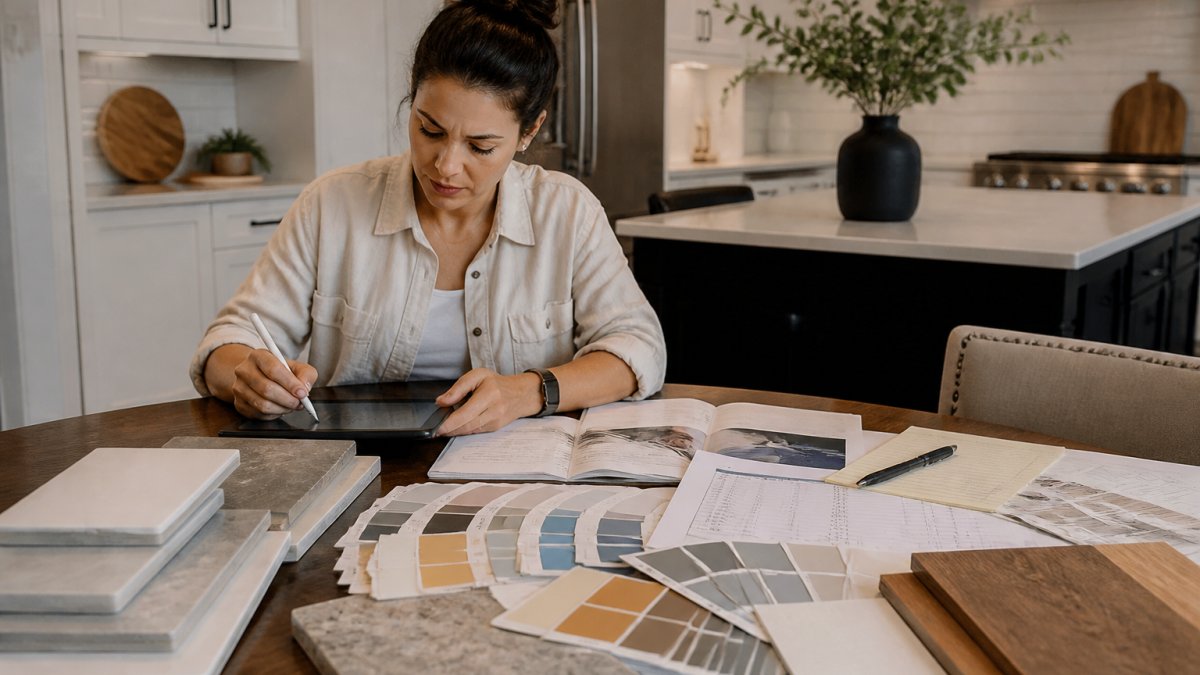
Start with a detailed material list. Include:
- Exact cabinet dimensions and style
- Countertop measurements and preferred material
- Flooring type and square footage
- Paint colours and quantities
- Hardware specifications (hinge type, pull size)
- Appliance models and dimensions
Get quotes from multiple suppliers. Compare prices for identical items. Many suppliers offer volume discounts or seasonal sales. Timing your purchases can save 10-20%.
Verify compatibility before buying. Cabinet doors must fit your existing frames. Countertops must align with appliance cutouts. Flooring must work with your subfloor. Mismatched materials create expensive problems during installation.
Create a purchase timeline:
- Order long-lead items first (custom cabinets, special finishes)
- Schedule delivery to avoid storage issues
- Buy installation materials last (hardware, fasteners, adhesives)
- Keep receipts and warranty information organized
Saving on kitchen renovation materials requires planning, not compromise. By prioritizing what matters most, comparing material options, and sourcing strategically, you can modernize your kitchen without overspending. RestMark Renovations works with your budget to deliver a functional, beautiful kitchen that reflects your lifestyle. Get a Free Estimate
Frequently Asked Questions
What kitchen renovation materials can you save money on?
Focus savings on cabinets through refacing or ready-to-assemble options, countertops by choosing laminate or solid surface instead of granite, and flooring with vinyl or ceramic tile. Paint, hardware, and backsplash materials also offer significant savings without sacrificing the final look. Prioritize splurging on appliances and fixtures that see heavy daily use, as these affect functionality and durability long-term.
Is it cheaper to refinish or replace kitchen cabinets?
Refinishing existing cabinets costs 30-50% less than replacement and preserves the original structure and layout. Refacing (replacing doors and hardware while keeping the frame) falls between refinishing and full replacement. Replacement makes sense only if cabinets are damaged, poorly designed, or you need to change the layout. For most renovations, refinishing or refacing delivers the best return on how to save money on kitchen cabinets.
What is the most affordable countertop material?
Laminate is the most budget-friendly option and performs well for moderate use. Solid surface materials offer better durability than laminate at a mid-range price. Ceramic or porcelain tile is durable and affordable but requires grout maintenance. Quartz costs more upfront but resists staining and scratching, making it better long-term value. Choose based on your cooking habits and how long you plan to stay in the home.
Should I buy leftover or clearance materials for a kitchen renovation?
Clearance and second-hand materials can save 20-40% on cabinets, countertops, and flooring. Verify condition, check for damage, and confirm compatibility with your design before purchasing. Buy slightly more than your estimate to account for breakage or future repairs, and keep documentation of what you purchased in case you need to source replacements later.