 ultimate-guide
Most Expensive Part of Kitchen Renovation
Table of Contents
- Cabinetry: The Primary Cost Driver in Kitchen Renovation
- Kitchen Cabinet Replacement Cost Breakdown
- Labor and Professional Installation Fees
- Cost of Moving Kitchen Plumbing and Electrical
- Countertops and Backsplash Materials
- How to Save Money on Kitchen Remodel
- Budget Allocation and Hidden Costs
- Frequently Asked Questions
Last Updated: September 27, 2026
Cabinetry: The Primary Cost Driver in Kitchen Renovation
When homeowners ask about kitchen renovation cost, cabinetry consistently emerges as the most expensive part. Cabinetry typically accounts for 30-40% of the total renovation budget. This isn't surprising, cabinets define the kitchen's visual character, consume the most linear footage, and demand precision installation.
The reason cabinetry dominates costs comes down to material quality, finish complexity, and labor intensity. Stock cabinets offer the lowest price point but sacrifice customization and durability. Semi-custom options provide more flexibility without the premium cost of fully custom cabinetry. Custom cabinetry, built to exact specifications for your space, represents the highest investment but delivers the refined craftsmanship and tailored design that transforms a dated kitchen into a modern, functional space.
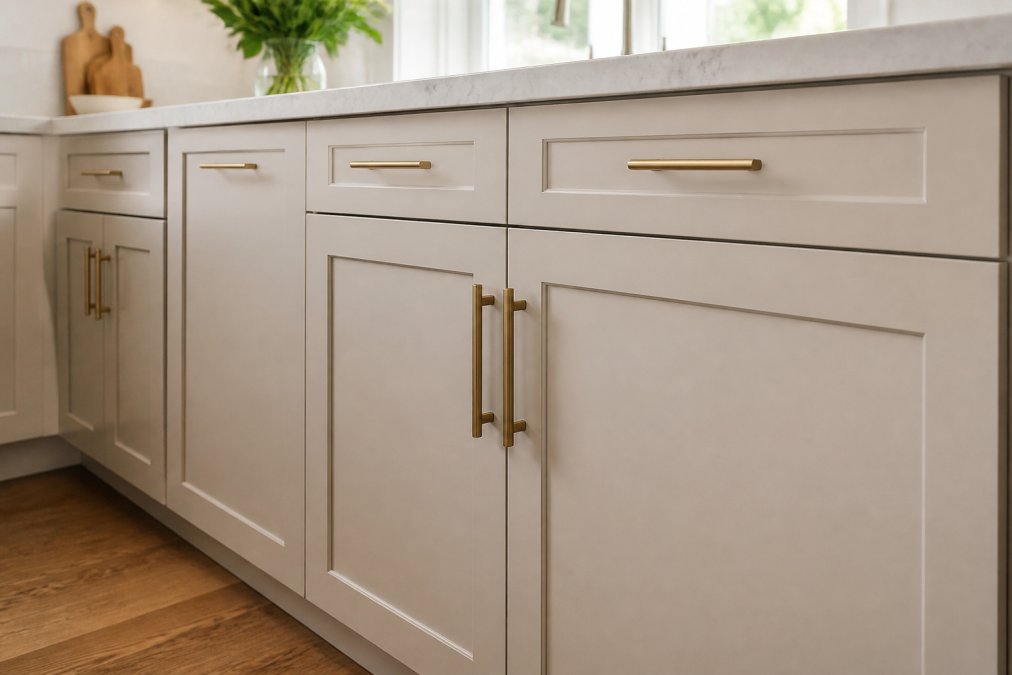
Beyond material selection, the finish quality dramatically affects pricing. Painted finishes require multiple coats, sanding, and skilled application. Stained wood demands careful wood selection and finishing expertise. Hardware alone, hinges, handles, and soft-close mechanisms, adds measurable cost per cabinet. When you combine these factors, cabinetry becomes the single largest line item in most kitchen renovation budgets.
Kitchen Cabinet Replacement Cost Breakdown
Kitchen cabinet replacement cost varies dramatically depending on the cabinet type you select. Understanding this breakdown helps you allocate your renovation budget strategically and avoid surprises during the project.
Stock cabinetry represents the most economical option. These pre-manufactured cabinets come in standard sizes and finishes, ready to install with minimal customization. They're manufactured in bulk, which keeps material costs low. However, stock options limit your ability to match your exact kitchen dimensions or select specialized features. Most stock cabinets work well for straightforward layouts without complex angles or custom storage needs.
Semi-custom cabinetry splits the difference between affordability and personalization. You choose from a manufacturer's catalog of styles, finishes, and sizes, but can adjust dimensions within certain parameters and add specific features. This option appeals to homeowners seeking more control over aesthetics without the premium price tag of fully custom work. Lead times are typically moderate, usually 4-8 weeks for manufacturing and delivery.
Custom cabinetry offers complete flexibility. A cabinetmaker builds your cabinets to exact specifications, matching your kitchen's unique dimensions, architectural features, and design vision. You control every detail: wood species, stain color, hardware, interior organization, and specialized features. This precision delivers the polished, tailored appearance that defines high-end kitchen renovations. The trade-off is significantly higher cost and longer lead times, often 8-12 weeks or more depending on complexity and material availability.
The kitchen cabinet replacement cost also reflects the material you choose. Solid wood (oak, maple, cherry, walnut) costs more than plywood or particleboard but delivers superior durability and refinishing potential. Painted finishes on quality substrates provide a clean, modern aesthetic. Stained wood showcases natural grain and character but requires careful wood selection and finishing expertise.
Labor and Professional Installation Fees
Labor and professional installation fees represent the second-largest expense in most kitchen renovations. Installation complexity, kitchen size, and structural modifications all influence labor costs. A straightforward cabinet installation in a standard kitchen might take 2-3 days. A complex renovation involving plumbing relocation, electrical rewiring, and structural changes can stretch to several weeks.
Professional installers must ensure cabinets are level, properly secured to wall studs, and aligned with countertops and appliances. Poor installation compromises function and appearance. Quality installation requires skill, experience, and attention to detail, precisely what Restmark Renovations prioritizes in every project. Our team manages installation as part of a coordinated workflow, ensuring cabinets integrate seamlessly with countertops, backsplash, and appliances.
Subcontractor fees add another layer to labor costs. Plumbers, electricians, and structural specialists charge separately for their work. Coordinating these trades requires project management expertise to prevent delays and cost overruns. Many homeowners underestimate how much professional coordination adds to the final bill. A general contractor's markup typically covers this coordination, ensuring trades arrive in the right sequence and work meets code requirements.
The timeline also influences labor costs. Rush projects command premium rates. Extended timelines allow contractors to schedule work efficiently, reducing per-hour costs.
Cost of Moving Kitchen Plumbing and Electrical
The cost of moving kitchen plumbing and electrical ranks among the most expensive hidden costs in kitchen renovations. If your new layout requires relocating sink placement, adding an island with a sink, or repositioning appliances, plumbing work becomes necessary. Moving plumbing lines means cutting into walls, rerouting supply lines and drain pipes, and ensuring proper slope for drainage. This work demands licensed plumbers and often requires permits and inspections.
Electrical work carries similar complexity. Moving outlets, adding new circuits for modern appliances, or installing an island with electrical service requires a licensed electrician. Modern kitchens demand more electrical capacity than older homes typically provide. Adding a new dishwasher, range hood, or induction cooktop often requires dedicated circuits. Upgrading electrical service to accommodate these demands adds significant cost.
The existing infrastructure in your home affects pricing. Older homes with outdated plumbing and electrical systems often require more extensive work to meet current code. Homes with concrete slabs instead of crawlspaces face higher costs for plumbing relocation. Accessible wall cavities simplify work; walls with limited space or structural elements complicate it.
Permits and inspections are mandatory for plumbing and electrical work (Building or renovation permits). These regulatory requirements protect your safety and your home's resale value. Licensed professionals factor permit costs into their estimates. Attempting unpermitted work creates liability and future complications when selling your home.
Countertops and Backsplash Materials
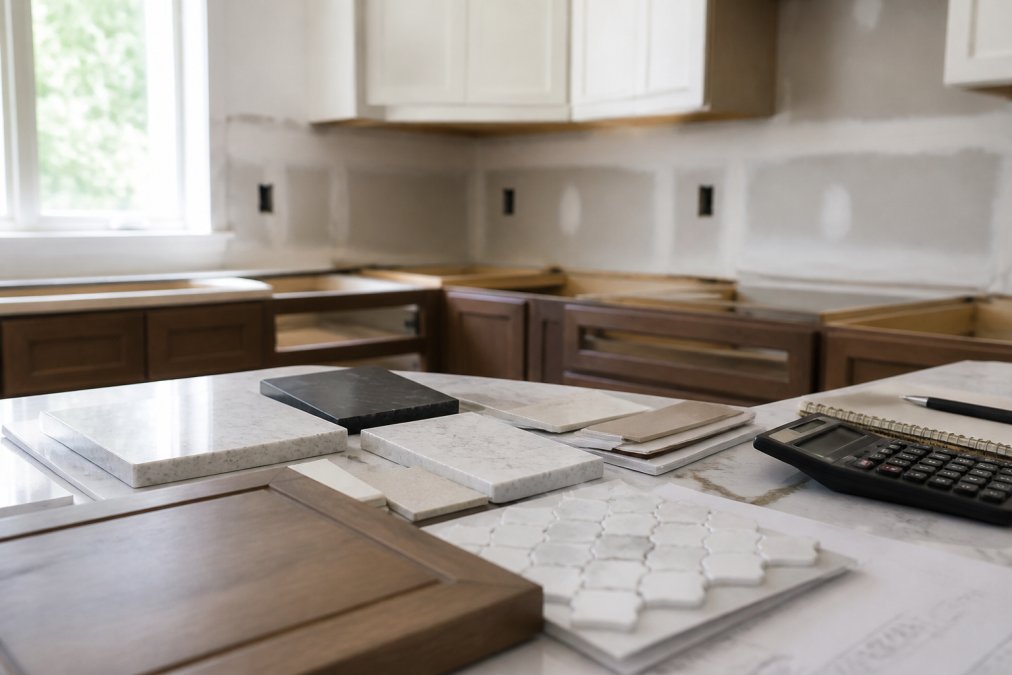
Countertops and backsplash materials represent the third-major cost category in kitchen renovations. These surfaces define the kitchen's visual impact and influence daily functionality. Material choice dramatically affects both cost and maintenance requirements.
Natural stone countertops (granite, marble, quartz) command premium pricing due to material rarity and installation complexity. Quartz engineered stone offers durability and consistent appearance at lower cost than natural stone. Laminate provides budget-friendly aesthetics but lacks the longevity and refinement of stone surfaces. Butcher block delivers warmth and character but requires regular maintenance and care.
Backsplash materials range from simple tile to specialty finishes. Ceramic or porcelain tile offers affordability and easy maintenance. Natural stone backsplash adds luxury but increases cost. Glass tile creates a modern aesthetic. Stainless steel backsplash suits contemporary kitchens. The backsplash's visual prominence means material choice significantly influences the overall design impact.
Installation labor for countertops and backsplash adds to material costs. Countertop fabrication (cutting, edge finishing, seaming) requires specialized equipment and expertise. Backsplash installation demands precision layout and grouting skill. Complex designs or high-end materials increase labor requirements.
The relationship between countertops and cabinetry affects total cost. Custom cabinetry often pairs with premium countertop materials to create a cohesive, refined aesthetic. Budget cabinetry paired with high-end countertops creates visual inconsistency. Balanced material choices throughout the kitchen deliver better overall value and appearance.
How to Save Money on Kitchen Remodel
Saving money on a kitchen remodel requires strategic choices without compromising quality or function. The most effective approach involves distinguishing between investments that deliver lasting value and expenses that can be reduced without consequence.
Prioritize cabinetry and countertops, these are the kitchen's foundation and define its character. Quality cabinets withstand decades of daily use. Premium countertops resist staining and damage. These investments pay dividends through durability and aesthetic appeal. Cutting corners here creates regret within years.
Consider semi-custom cabinetry instead of fully custom. You retain meaningful personalization while reducing cost compared to completely custom builds. Many semi-custom options deliver refined aesthetics at moderate pricing. Standard sizes and finishes reduce manufacturing time and expense.
Simplify your layout. Keeping the sink, range, and refrigerator in their existing locations eliminates expensive plumbing and electrical work. If relocation is necessary, minimize the distance moved. Each plumbing or electrical change adds hundreds to your budget.
Select durable, practical backsplash materials. Ceramic tile offers excellent value and easy maintenance. Specialty materials like natural stone or custom tile add cost without proportional functional benefit.
Budget Allocation and Hidden Costs
Understanding budget allocation prevents overspending and ensures your renovation delivers maximum value. A typical kitchen renovation budget breaks down approximately as follows: cabinetry (30-40%), countertops (15-20%), labor and installation (20-30%), appliances (10-15%), and contingency (10-15%).
Frequently Asked Questions
What is the most expensive thing in a kitchen remodel?
Cabinetry typically accounts for 30-40% of the total kitchen renovation budget. Custom or semi-custom cabinets represent the single largest line item. Labor costs for installation, along with structural changes like plumbing relocation, rank as secondary major expenses. The specific breakdown depends on your choice between stock, semi-custom, and custom cabinetry options, as well as the complexity of your layout changes.
How much should I allocate for kitchen cabinetry in my budget?
Plan to dedicate 30-40% of your total kitchen renovation budget to cabinetry. This includes the cabinet boxes, doors, hardware, and installation labor. Stock cabinets sit at the lower end of this range, while custom cabinetry pushes toward the upper end. Factoring in finish quality and storage solutions will influence where your project falls within this allocation.
Does moving plumbing and electrical increase renovation costs significantly?
Yes. Relocating plumbing and electrical systems can add substantial costs to your project timeline and budget. Plumbing moves often require new supply lines, drain routing, and permit approvals. Electrical work involves rewiring, new outlet placement, and code compliance. These structural modifications typically fall second only to cabinetry in terms of expense, particularly if your kitchen layout changes significantly.
Can I renovate my kitchen for $10,000?
A full kitchen renovation with a limited budget may only cover stock cabinets, basic countertops, and minimal labor, without appliances, plumbing changes, or electrical work. For a realistic assessment of what your budget can achieve, request a free estimate from a professional contractor who can evaluate your specific space and goals.